A New Chapter
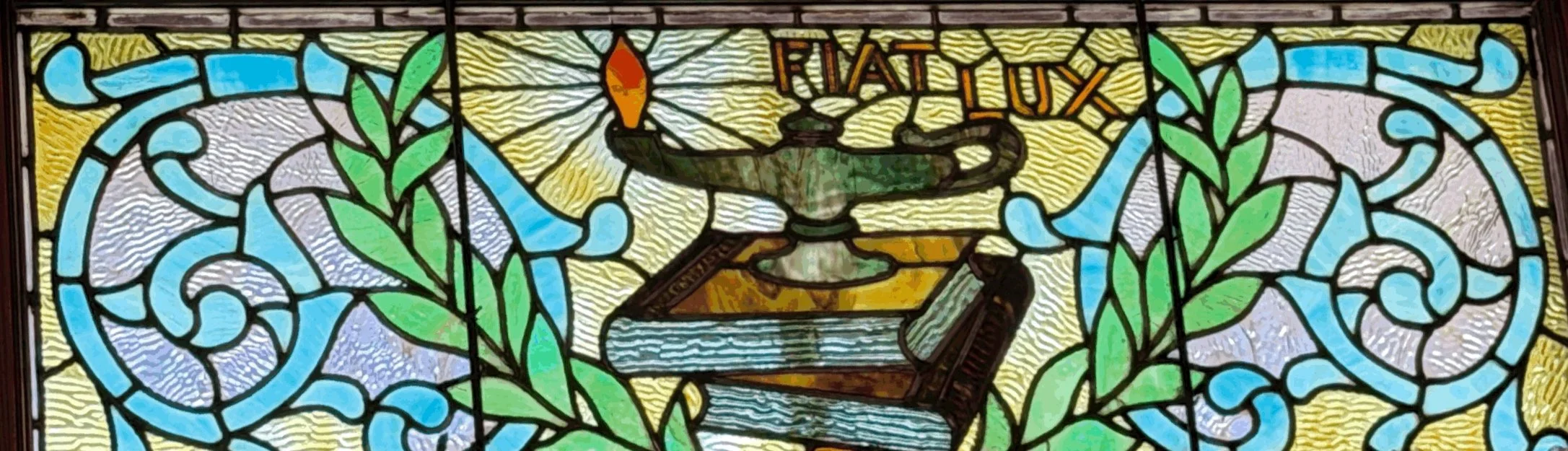
My curiosity has never neatly fit inside of a single discipline and for much of my life it has been a point of contention. Why can’t an artist also be a geologist and a mystic also an astronomer? In college, a science professor argued that an art student couldn’t also get a degree in the sciences because the curriculums diverged drastically. At the time, I thought the obstacle was my education. Looking back, I realize it was the assumption that reality could be divided as neatly as our institutions. Academic departments are human constructs; experience is not.
I was constantly encouraged to choose a lane. Was I an artist? A scientist? As though curiosity alone required specialization. Rather than choosing, I continued pursuing both science and art, eventually building a life that made room for each.
We inherit disciplines, but we experience the world as a whole. The sunrise doesn't distinguish between astronomy and poetry. A crystal doesn't know whether it belongs to geology, chemistry, or sacred geometry. Human experience has always crossed these boundaries long before universities divided them into departments. It took me years to recognize that I didn't need to resolve this tension. I needed to understand it.
I recently wrote a poem. When I finished the poem and read it back to myself, I realized something I hadn't consciously intended. It moved fluidly between geology, astronomy, mythology, ritual, and spirit. For years I had treated those interests as separate parts of myself—as though they belonged in different rooms. But on the page they weren't competing with one another. They were completing one another. Understanding the Earth has never made it feel less sacred to me. If has only deepened my reverence for it.
I am beginning to understand my work was never meant to fit inside a single discipline. It was meant to follow curiosity wherever it led. Scientific inquiry and sacred imagination ask different questions of the same reality. One investigates mechanisms and patterns. The other explores meaning, relationship, and experience. This realization has helped me reframe the intention behind Divinities of Light. I don’t see these ways of knowing as separate conversations, but as different perspectives capable of illuminating one another—not by asking either to surrender its integrity, but by deepening our experience of the other.
I'm interested in the moments when science, art, and myth stop speaking past one another and begin revealing different dimensions of the same world.
Divinities of Light is not an attempt to collapse science into spirituality, nor to explain away mystery through science. It is an invitation to remain fluent in more than one language of wonder—to recognize that careful observation, artistic expression, and sacred practice all arise from the same human desire to encounter reality more deeply. Each offers a different way of participating in a world that is richer than any single discipline can describe.
————
Sometimes enlightenment arrives in unexpected ways. I didn't set out to write a manifesto for Divinities of Light. Looking back, however, this poem quietly answered the questions I had been asking for years. Rather than separating geology from mythology, astronomy from ritual, or science from spirit, why not let them coexist as they do in nature?