Badlands Remember an Ancient Sea
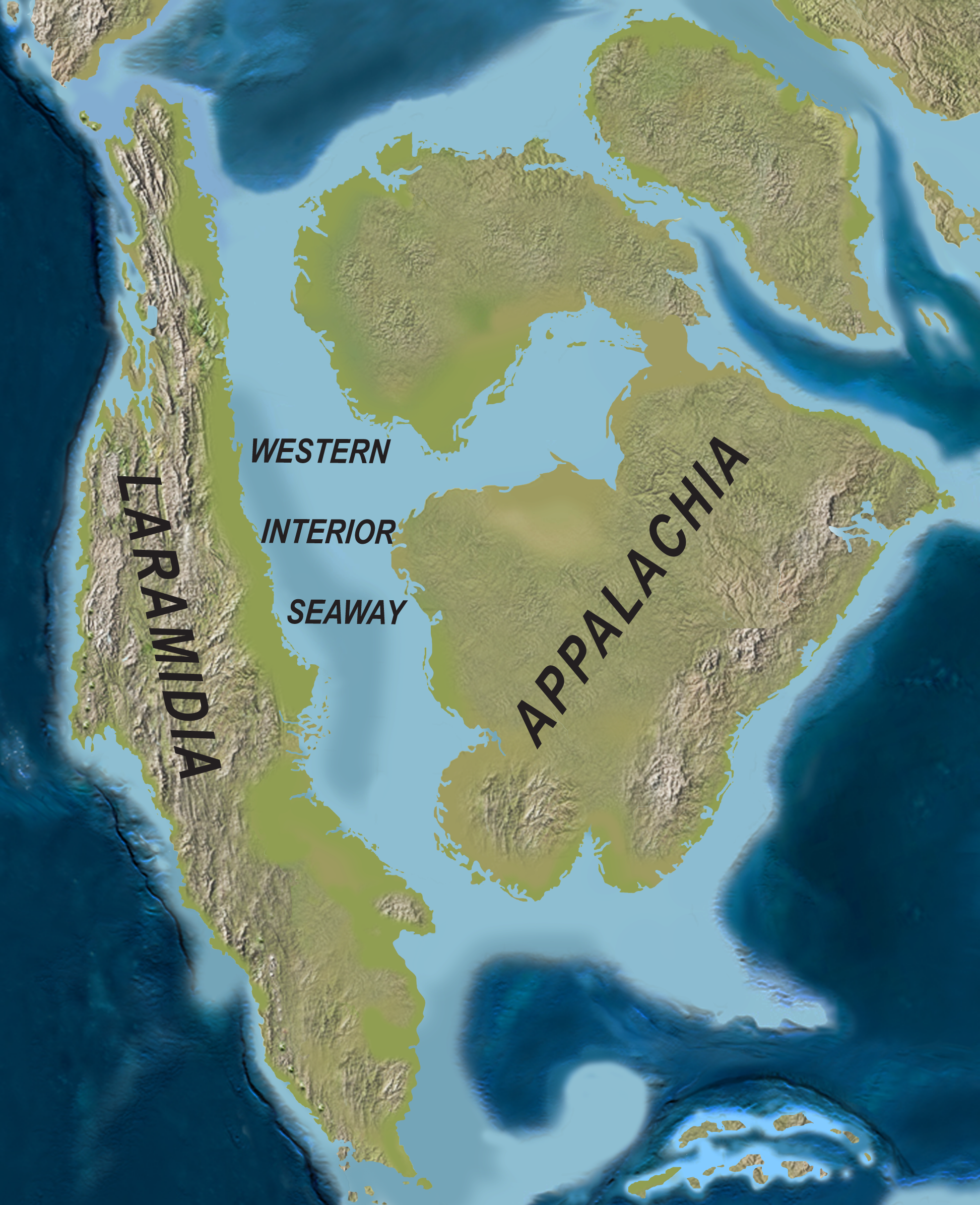
The map of North America with the Western Interior Seaway during the Campanian
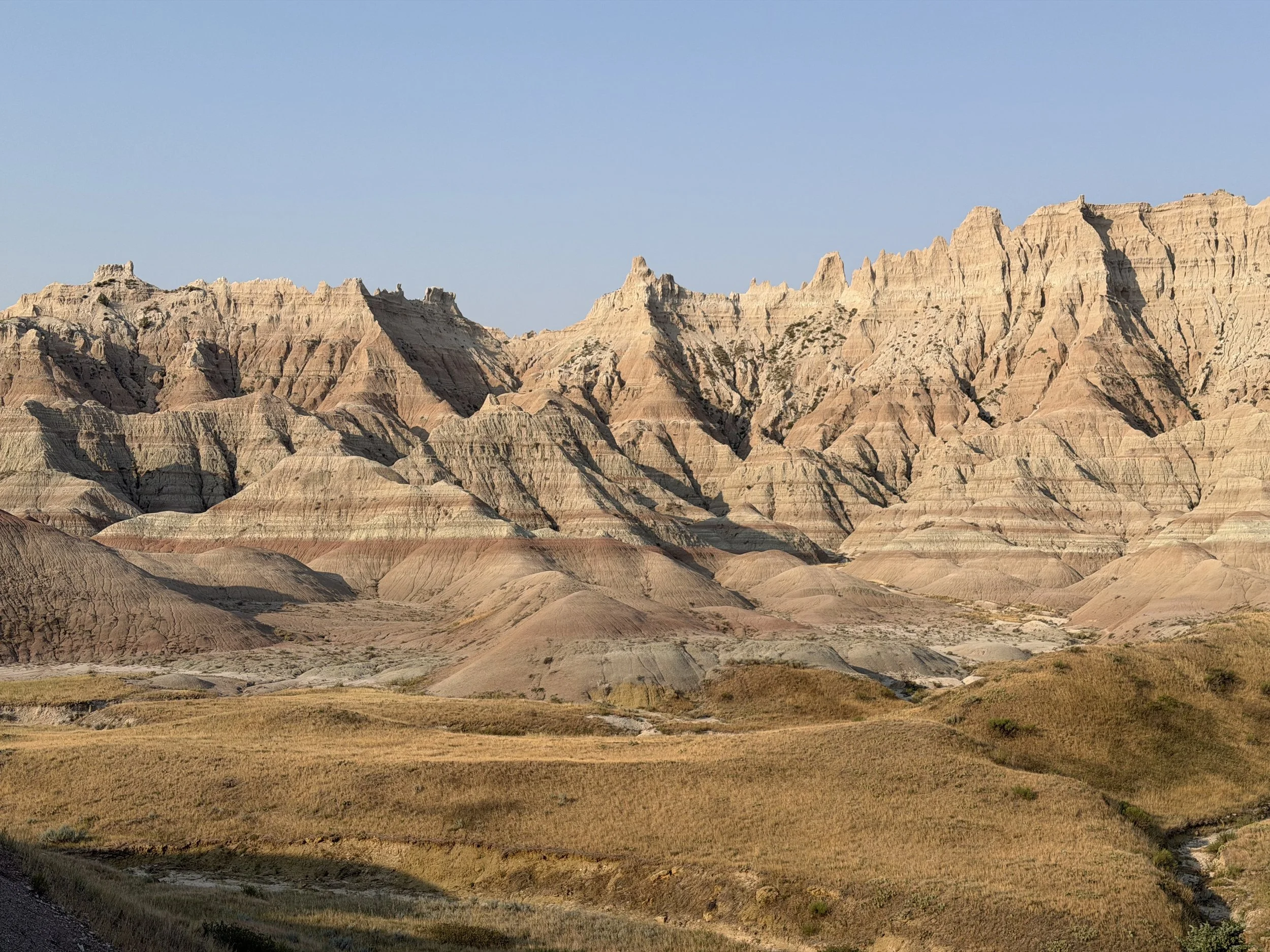
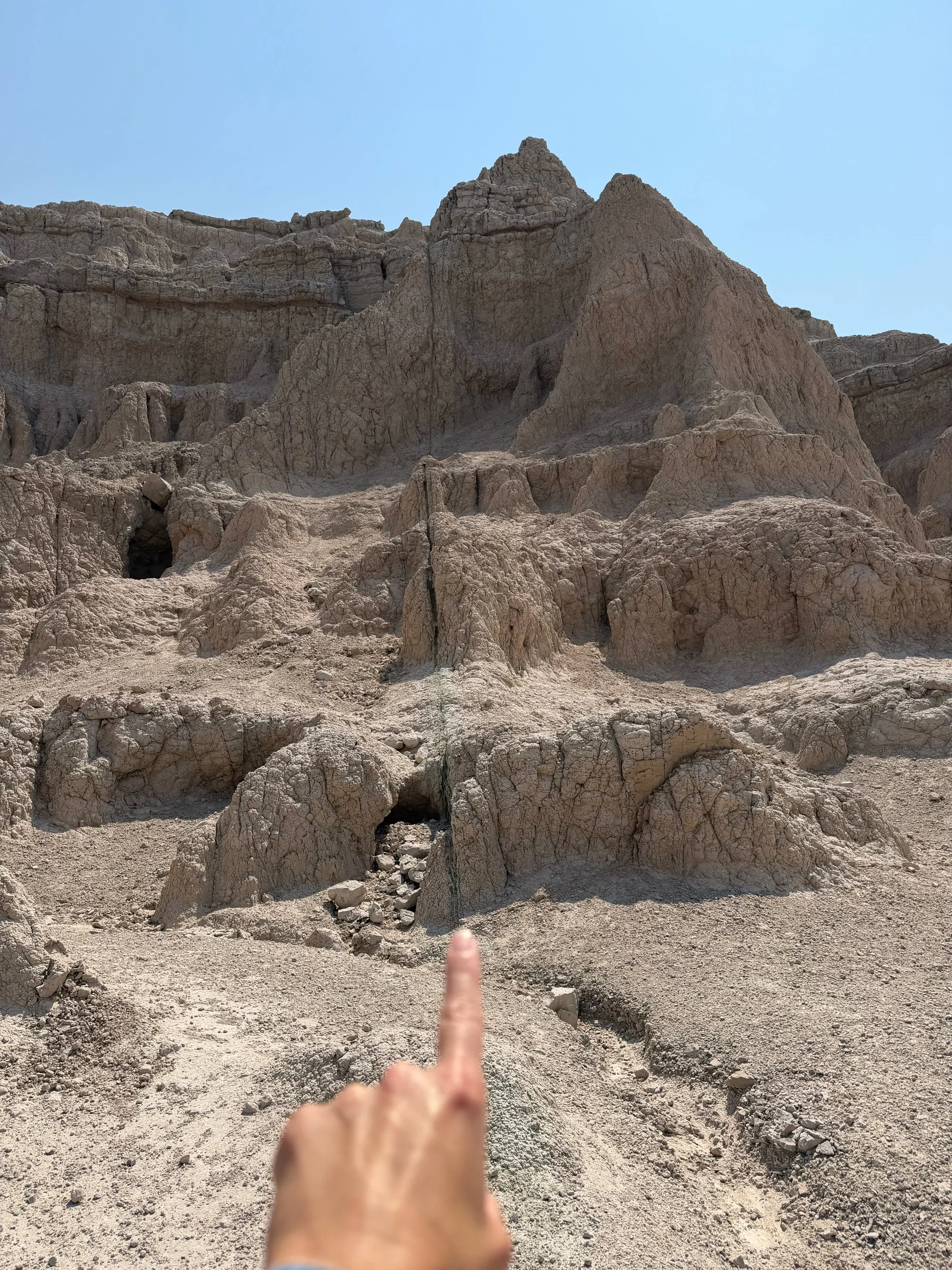
Hollow. Brittle. Dusty.
Sometimes sparkly.
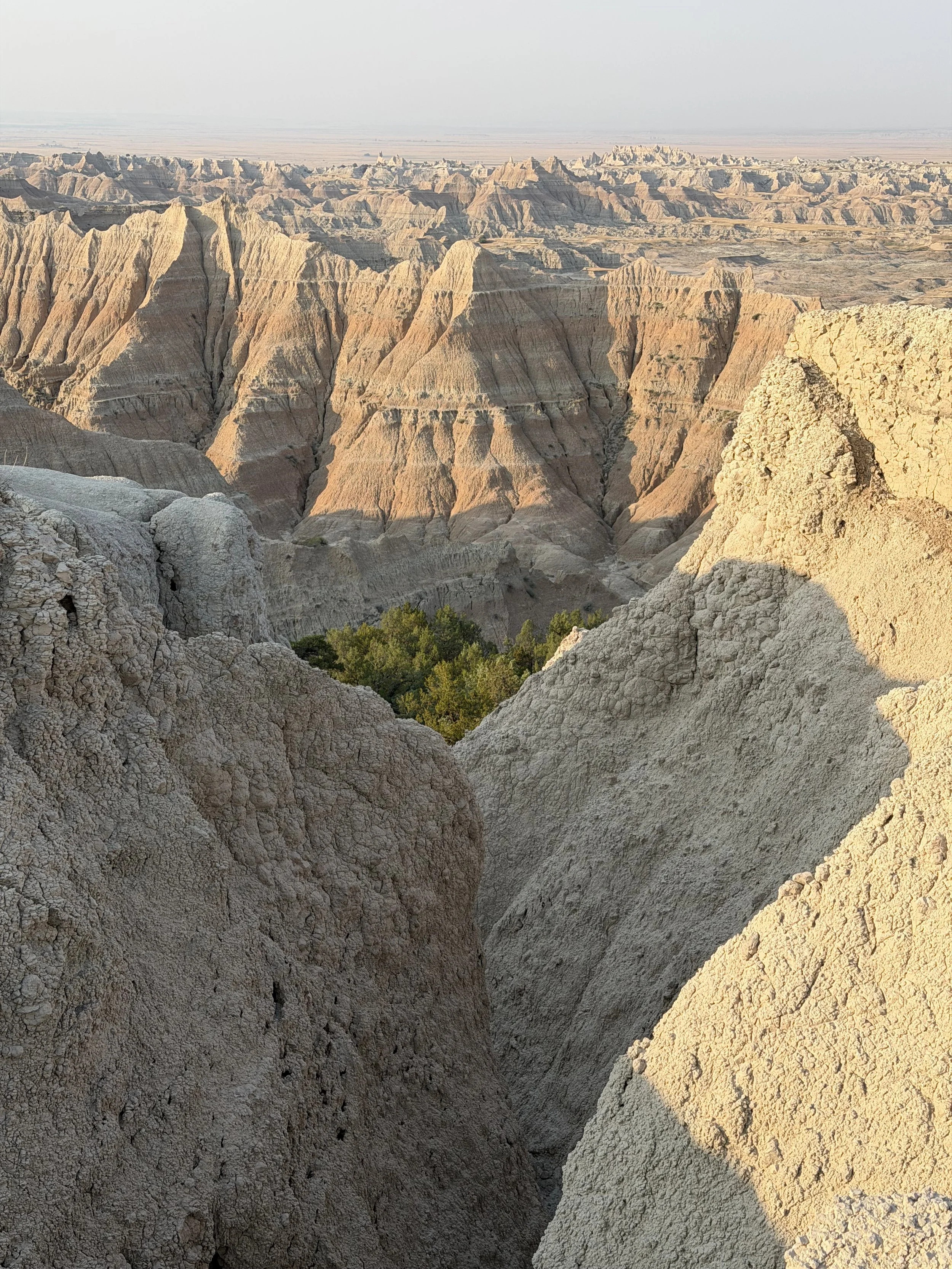
Fractured seams of shale threaded between sandstone and siltstone.
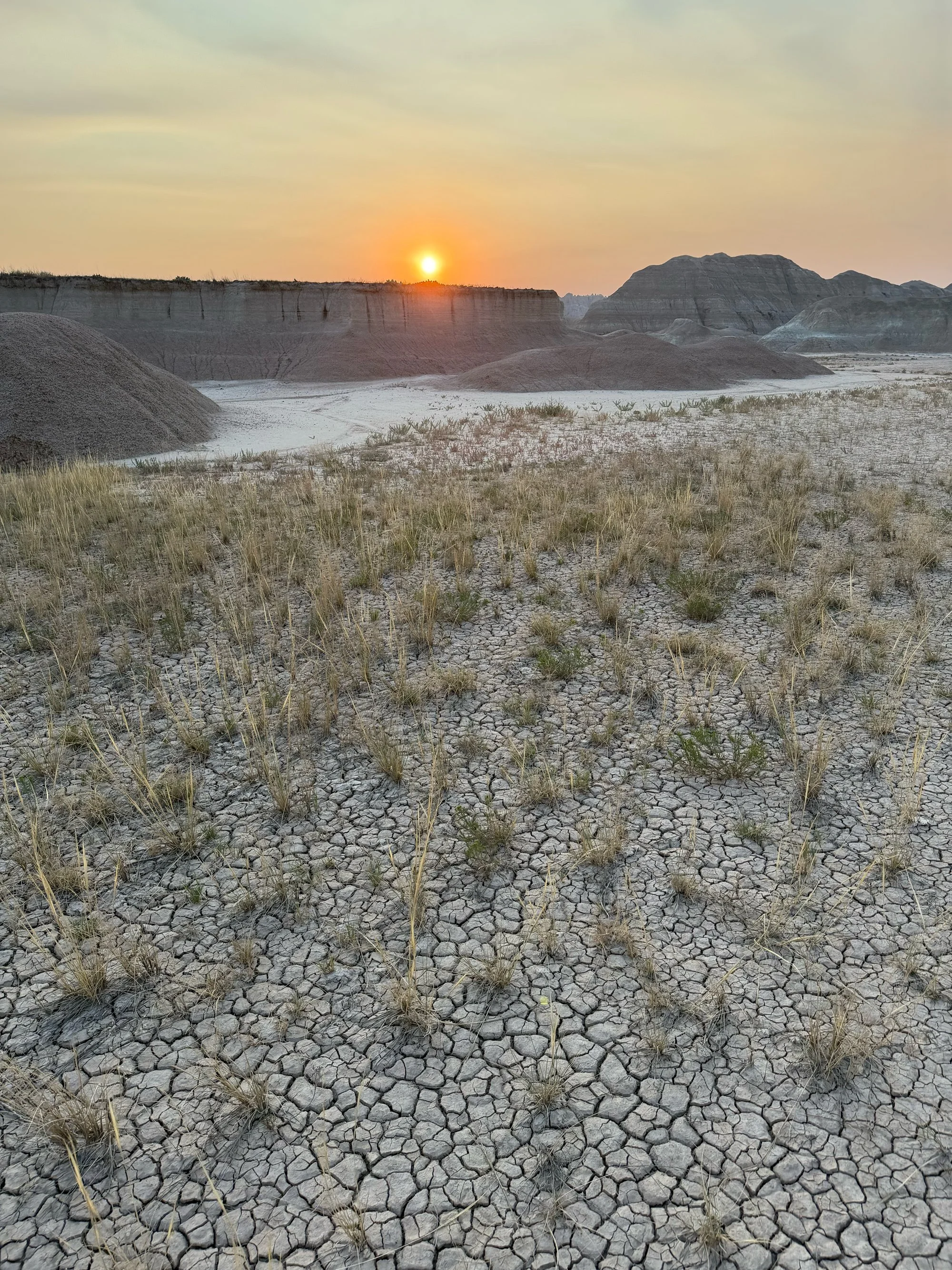
The landscape feels fragile, as though it could crumble beneath your fingertips.
For a place with “Bad” in its name, it feels incredibly soft and supple up close.
Someone hiking nearby called it a miniature Bryce Canyon.
I understood the comparison, but it feels different to me.
Bryce Canyon is sculpted from limestone. The Badlands feel more like an unfired clay sculpture than stone.
Perhaps this is partly because of bentonite, a clay-rich material that began as volcanic ash. Blown east from distant eruptions, the ash settled across landscapes and was chemically altered over time.
But the story beneath my feet reaches much further back.
Seventy-five million years ago, this landscape lay beneath water. What is now Badlands National Park in South Dakota was submerged beneath the Western Interior Seaway during the Late Cretaceous Period. Stretching from the Arctic Ocean to the Gulf of Mexico, this inland sea divided North America into two landmasses: Laramidia to the west and Appalachia to the east.
Standing here today, it's difficult to imagine waves where there is now prairie grass.
Yet beneath this landscape remains the memory of the sea.
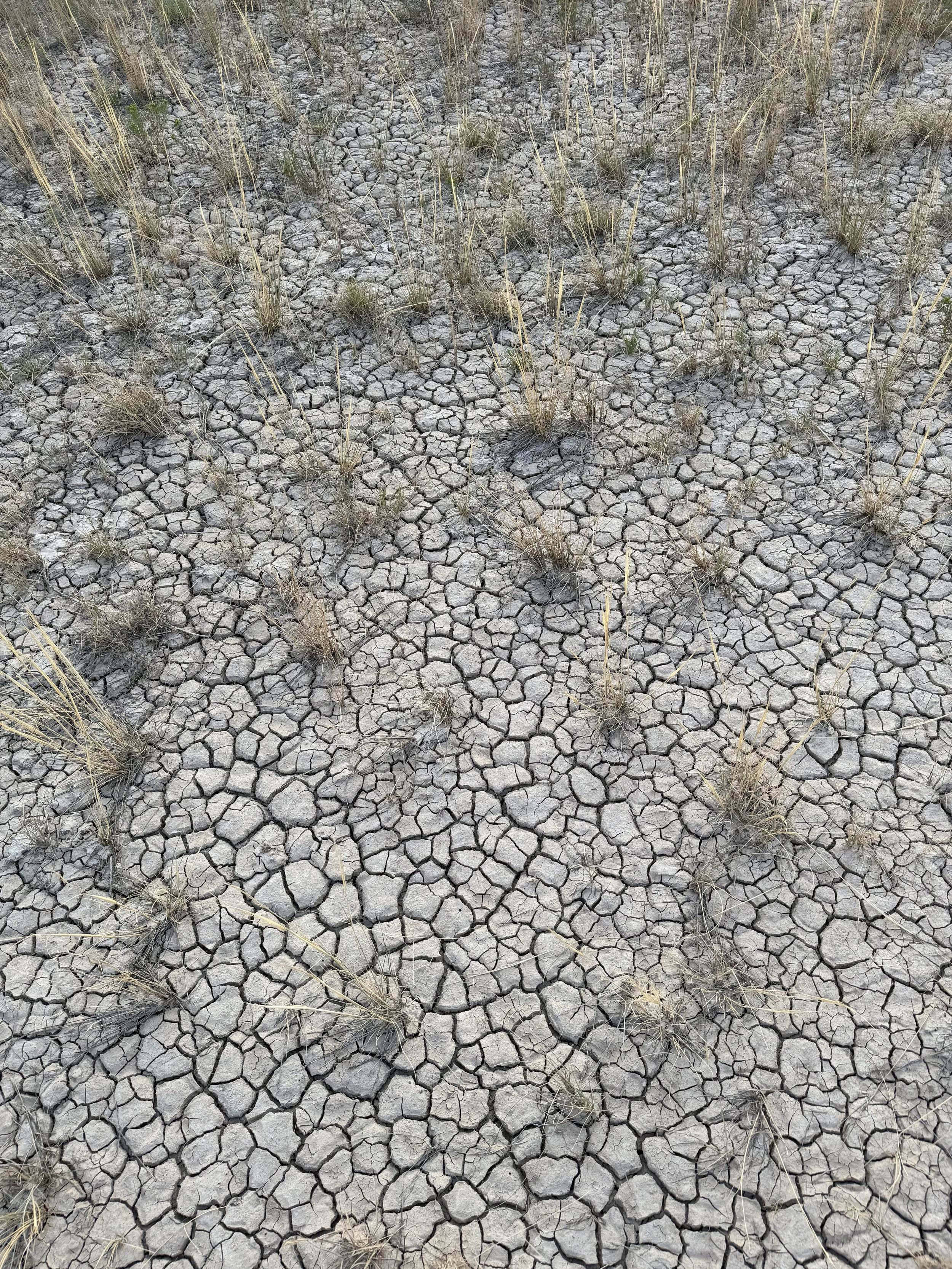
Bentonite also serves as a time marker, helping geologists correlate rock layers across great distances. Bentonitic clay can absorb remarkable amounts of water, swelling when wet, then shrinking and cracking as they dry. This repeated expansion and contraction weakens exposed sediment and contributes to the rapid erosion of the Badlands.
Stratigraphy. Erosion. Oxidation.
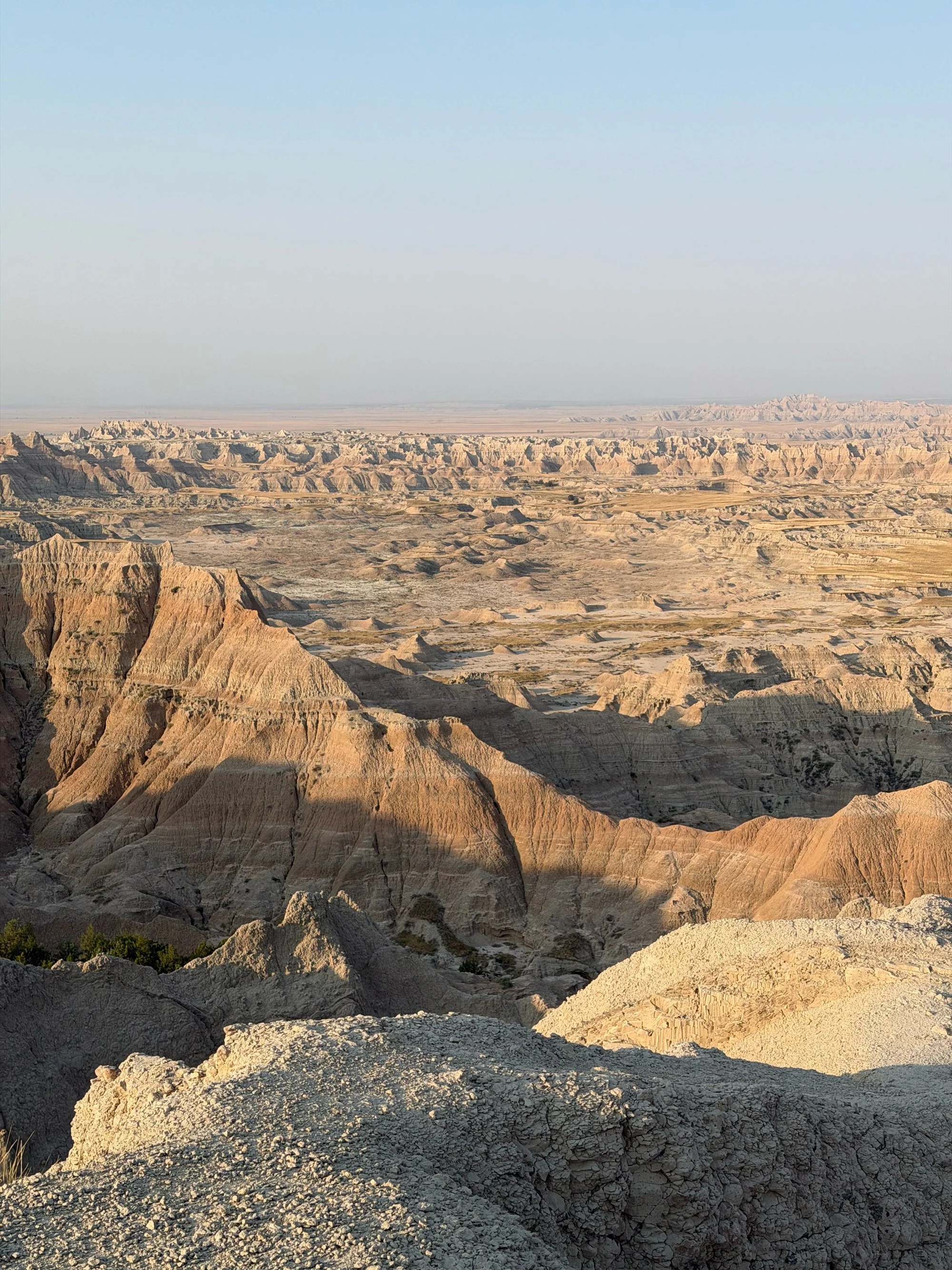
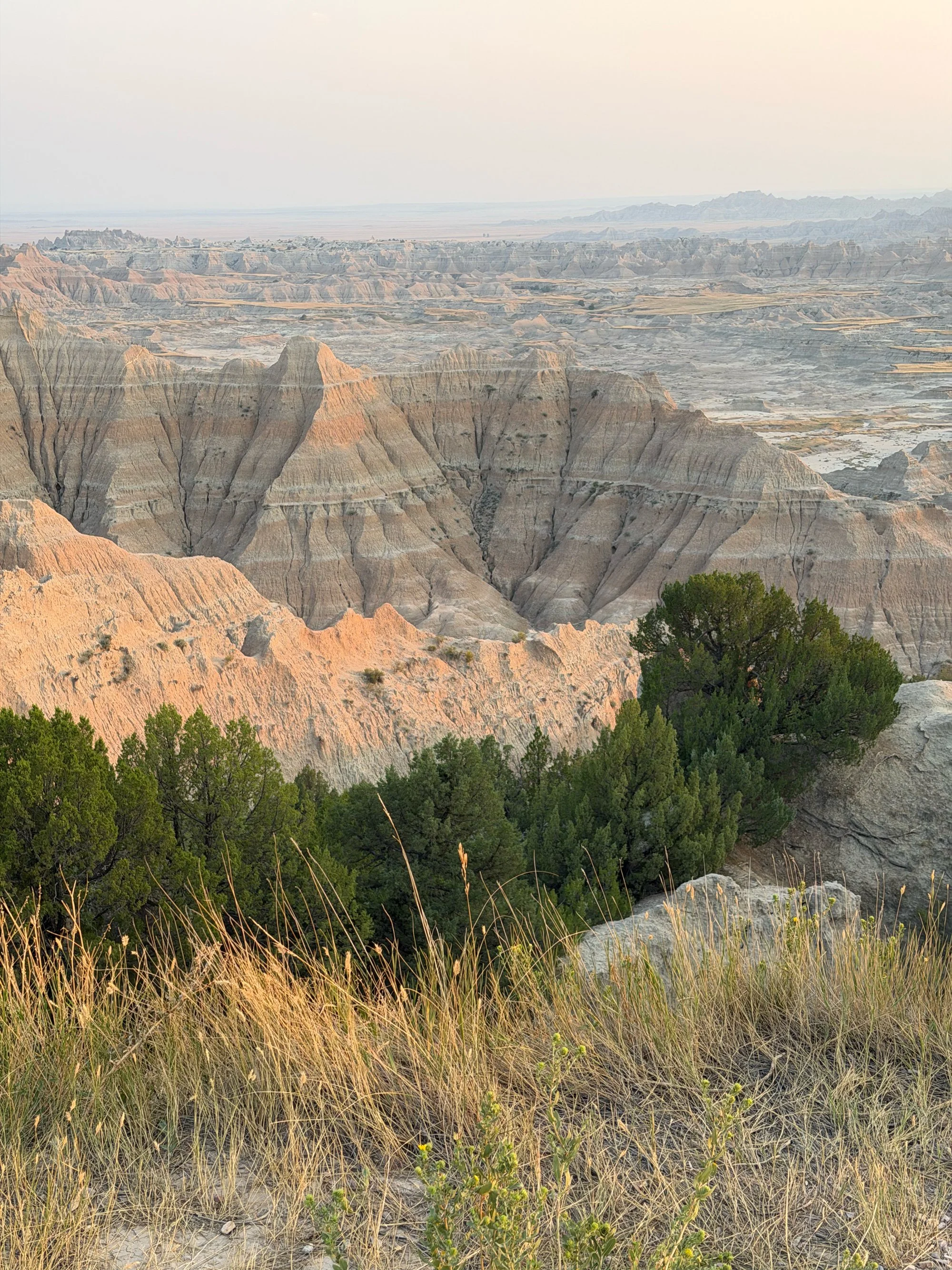
The cliffs reveal timestamps of vanished environments. Iron oxides stain the formations red, orange, and yellow. Clay-rich sediments produce pale gray and tan layers, while manganese compounds and ancient organic material create subtle purples and charcoal bands.
I spent a lot of time chasing the light.
The cliffs become entirely different landscapes as the sun moves across the sky. Low morning light reveals textures that disappear at midday. At sunset, exposed cliffs glow in warm reds and golds.
I visited the park at least four times in three days.
The first evening I visited, wildfire haze hung high in the atmosphere. The sun became a brilliant red-orange disc suspended above the endless prairie.
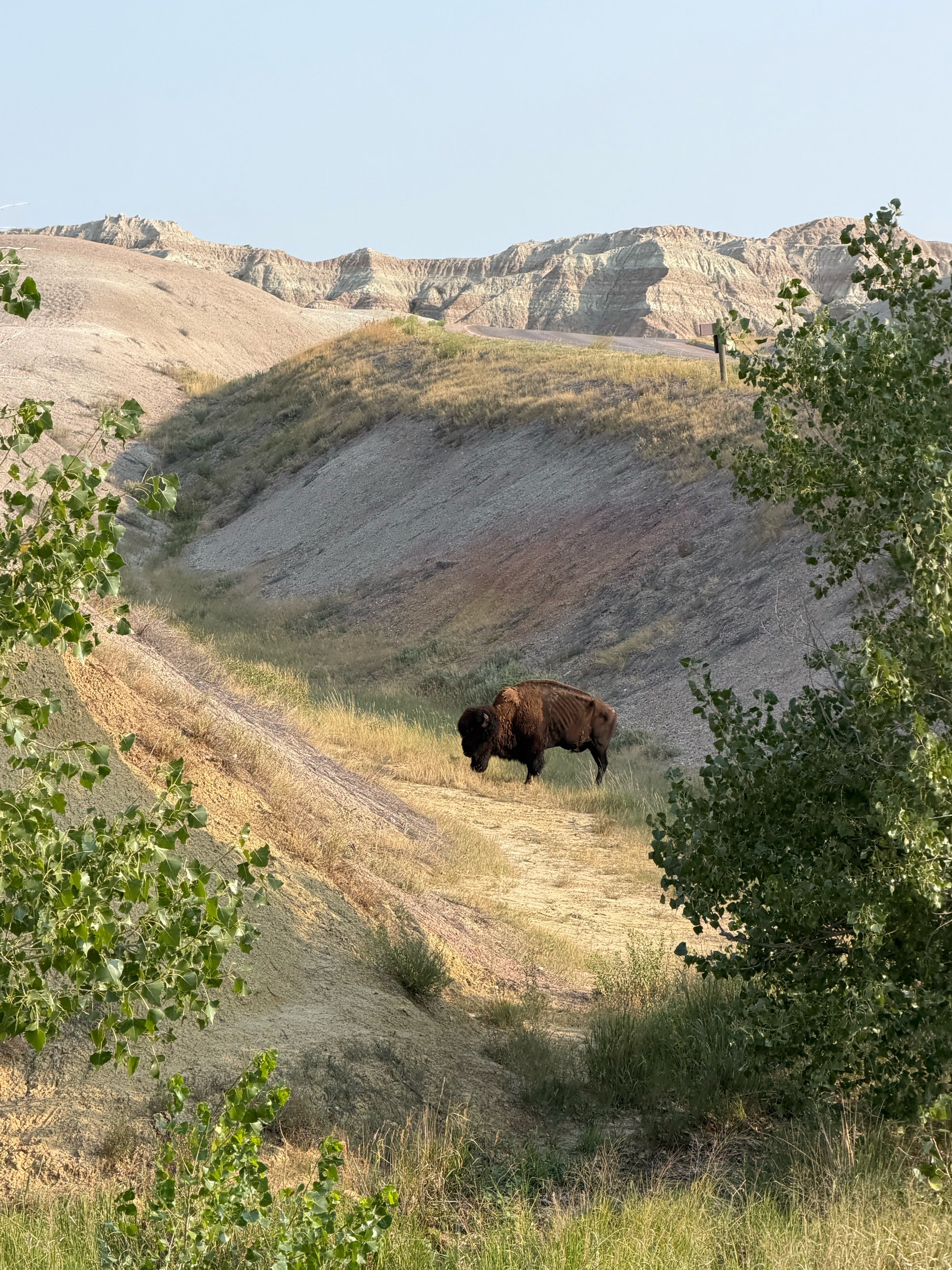
A lone bison crossed the valley below.
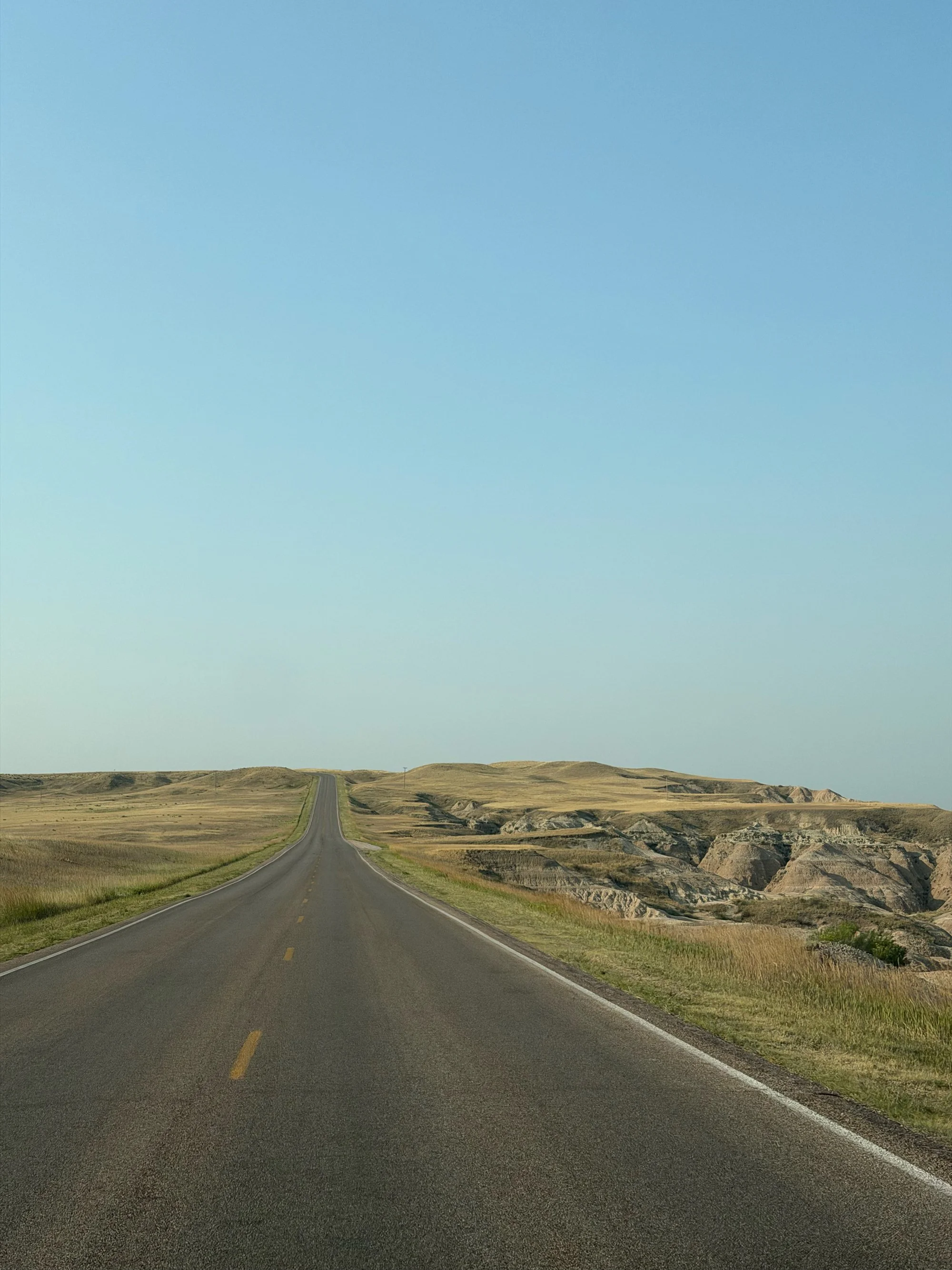
The grasslands surrounding Wall stretched uninterrupted across the horizon. Coming from the Southwest, the immense openness reminded me of desert landscapes. Here, however, the openness is filled with grass instead of sand.
I long for the long views in both landscapes.
Long after the ancient sea disappeared, rivers, floodplains, wetlands, and watering holes occupied this region. Animals lived and died here. Their remains were buried in sediment and preserved for tens of millions of years.
At a picnic site, I followed a wash facing east as the sun set behind me. Long shadows were casted on what appeared to be a tooth and small digit bones emerging from the sediment. Later, I found a sign that explained it was once a watering hole. Animals did indeed live and die there.
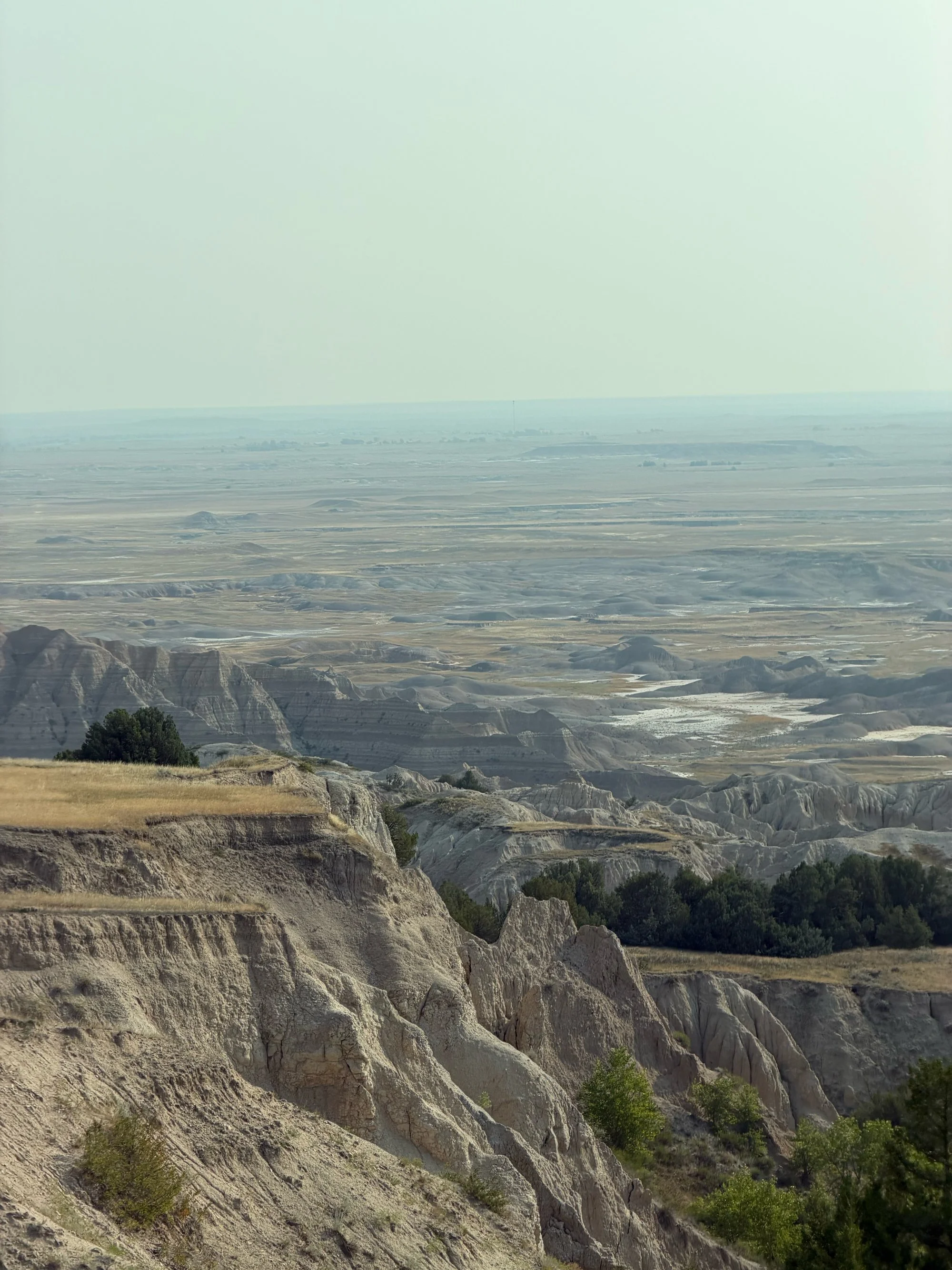
Regional uplift and the development of the White River drainage gave running water the gradient to cut into these soft sediments. Tributaries carved backward into the surrounding prairie, exposing increasingly older layers. Rainfall, snowmelt, freeze-thaw cycles, and gravity accelerated the process. Harder beds persisted while softer material washed away, leaving cliffs, pinnacles, buttes, and deeply incised gullies.
It is a landscape constantly carved by every storm, wind and water.
The Badlands are not being built. The are actively being removed.
The Lakota have long known this place as Makȟó Šičá (Mako Šica), translated as "bad lands." The name reflects a landscape that was rugged, difficult to cross, and deserving of respect. French fur traders later echoed the sentiment with their phrase les mauvaises terres à traverser—"bad lands to cross."
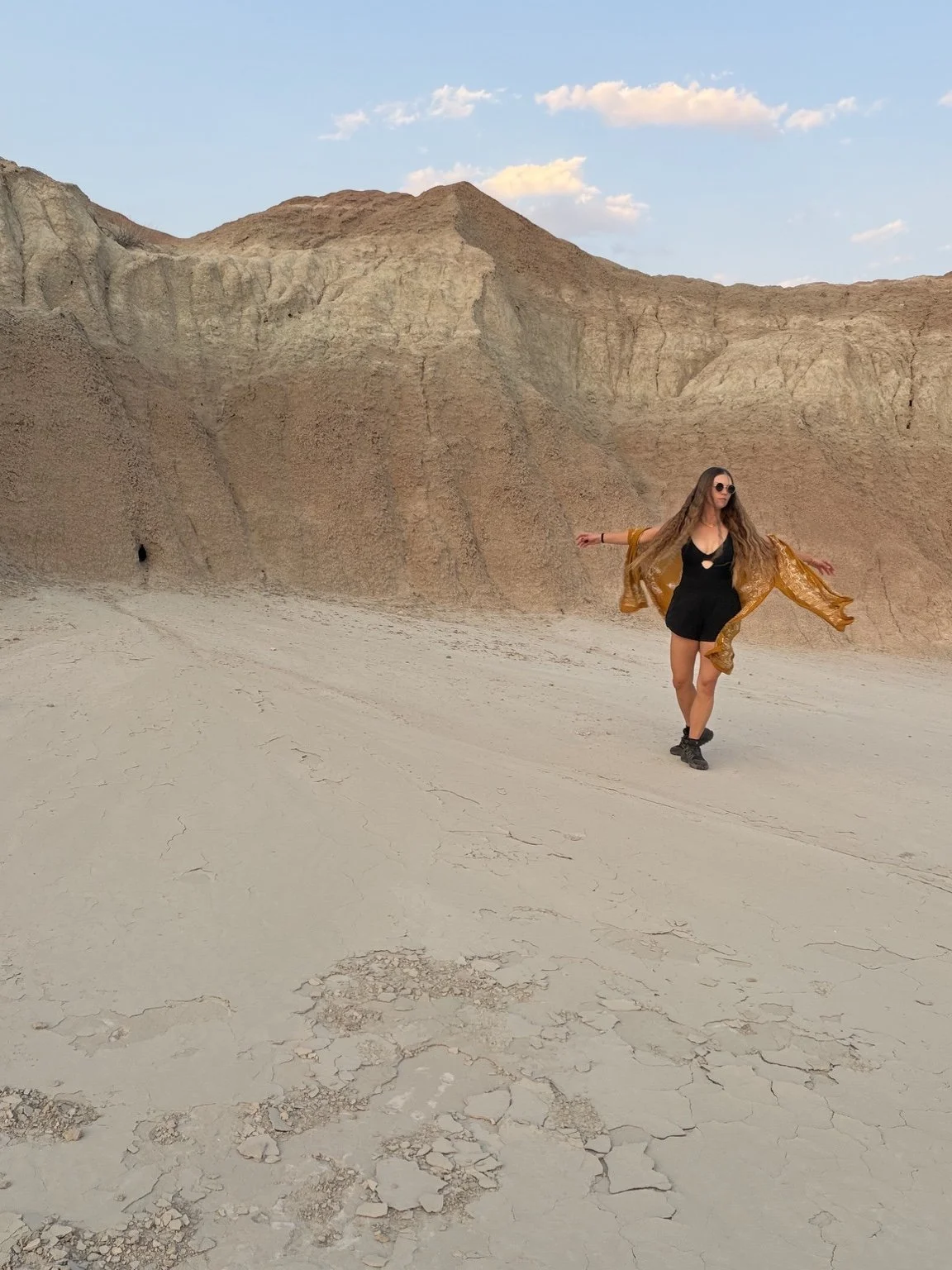
I returned the following morning before sunrise.
The difference was immediate.
Low-angle light from the east made the stratigraphy unmistakable.
Wildlife seemed to appear everywhere.
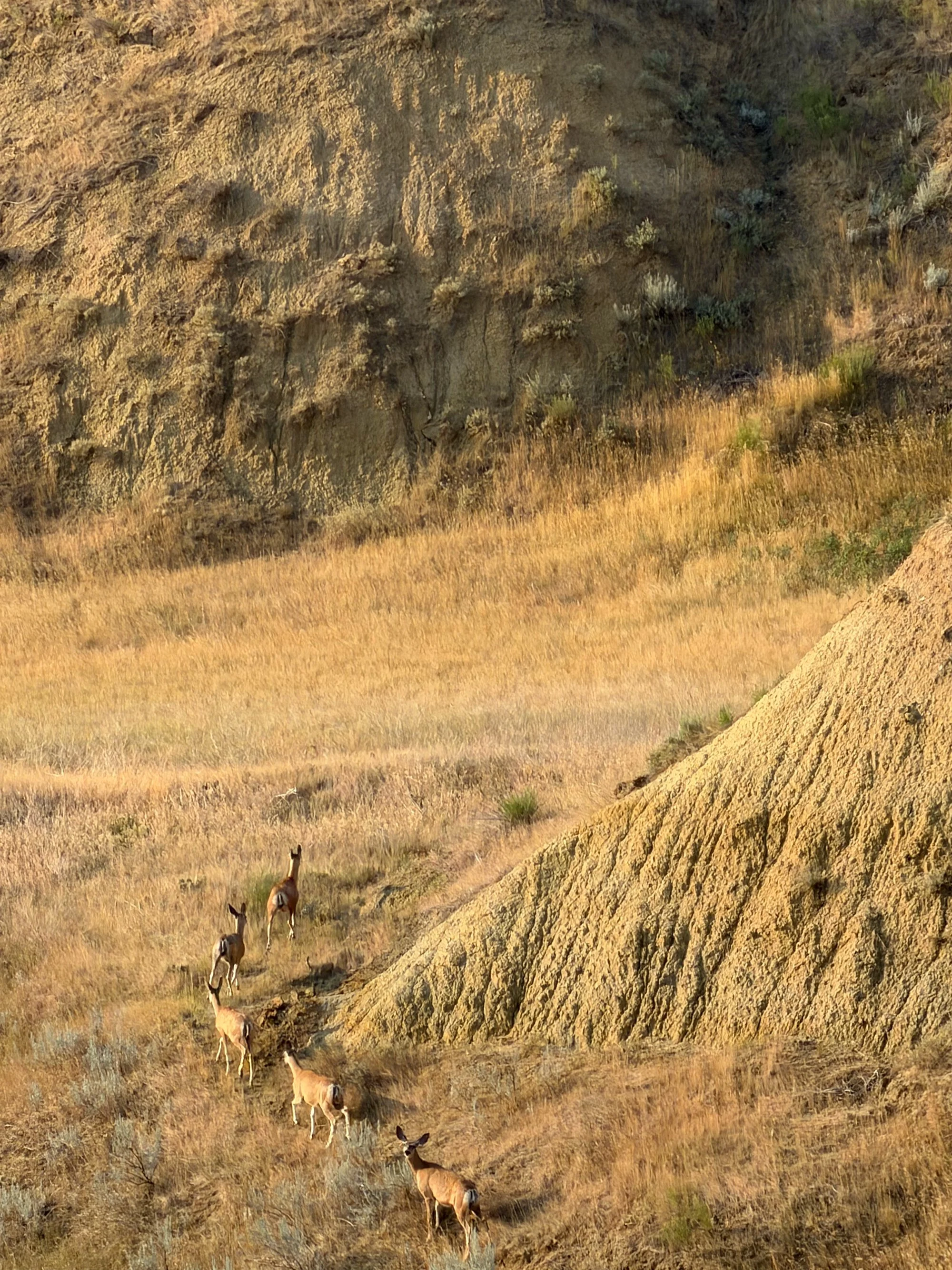
Five mule deer moved together across the grasslands, stopping every few yards to scan the landscape before trotting along. One paused long enough for us to lock eyes before disappearing over the next hill.
Later, a solitary bison grazed quietly below the cliffs.
Before exiting the park, a coyote crossed the road less than twenty feet in front of my Jeep.
The Badlands are often remembered for their dramatic rock formations, but what surprised me most was how alive they felt. Ancient geology, expansive grasslands, and abundant wildlife.
The deeper I looked, the harder it became to separate the ancient landscape from the living one. Fossil animals emerged from eroding sediment while mule deer, bison, and coyotes moved across the grasslands above.
Light reveals something different throughout the day.
Storms reshape the ridges.
Washes carry the landscape away.
As layers are removed, history is revealed.
The Badlands remember an ancient sea.
Further Viewing
The Laramide Orogeny was responsible for formations like the Badlands. This excellent deep dive explores the Laramide Orogeny more broadly, providing useful context for the tectonic history behind the region.
References
National Park Service. (n.d.). Geology of Badlands National Park. U.S. Department of the Interior.
National Park Service. (n.d.). Fossils of Badlands National Park. U.S. Department of the Interior.
National Park Service. (n.d.). Makȟó Šičá: The Lakota and the Badlands. U.S. Department of the Interior.
South Dakota Geological Survey. (n.d.). Geology of South Dakota. South Dakota Mines.
U.S. Geological Survey. (n.d.). The Geologic Story of Badlands National Park. U.S. Department of the Interior.
Image Credit
Western Interior Seaway map: Wikipedia contributors. Western Interior Seaway. Wikipedia.
All other photographs © Divinities of Light.