Naxos
Greece has always been a special place for me. But Mykonos was maddening. The taxis took us to the wrong destination. Challenges with check-in. Club music polluting the air. Muscle tension. Whistling wind. Nightmares. I was a crank and a cripple by morning.
Thank the gods for a SeaJet to Naxos.
The largest of the Cycladic Islands in the Aegean Sea, Naxos was the calm I needed. The people seemed more grounded. Locals and retirees. The crashing of waves. Birds chirping. Cats–not begging to be fed, just present to observe.
Our hotel was a block away from the beach. Greek salad, octopus and Aperol spritz.
Walking down the street that afternoon, we decided we wanted to see the Temple of Apollo at the seaport.
Almost immediately, a taxi driver appeared and asked us if we called him to go to the Temple of Apollo.
“Why yes, we do want to go–but we didn’t call you.”
He brought us there anyway.
It was a significant synchronicity, and he became our driver for the rest of our stay on Naxos.
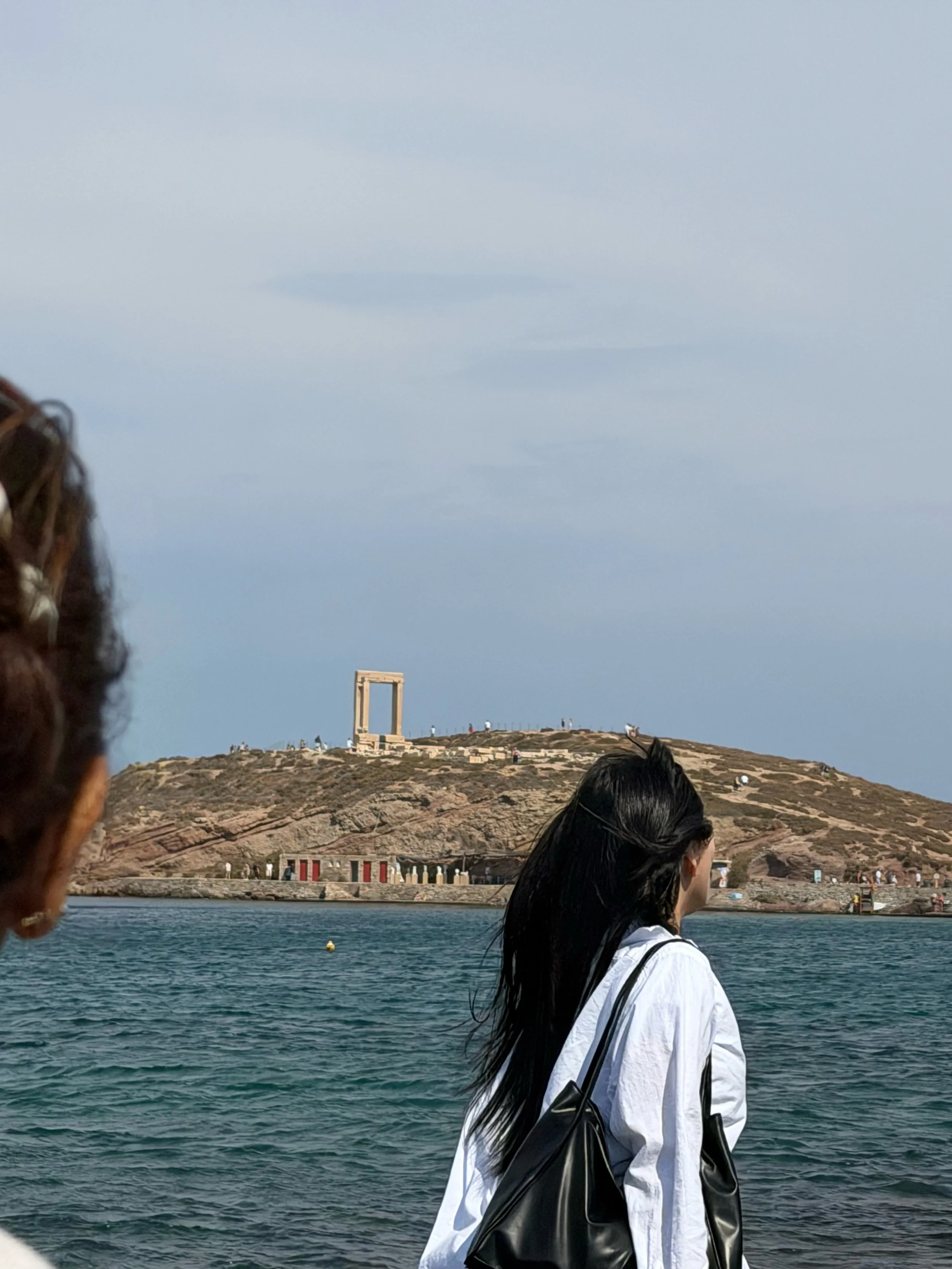
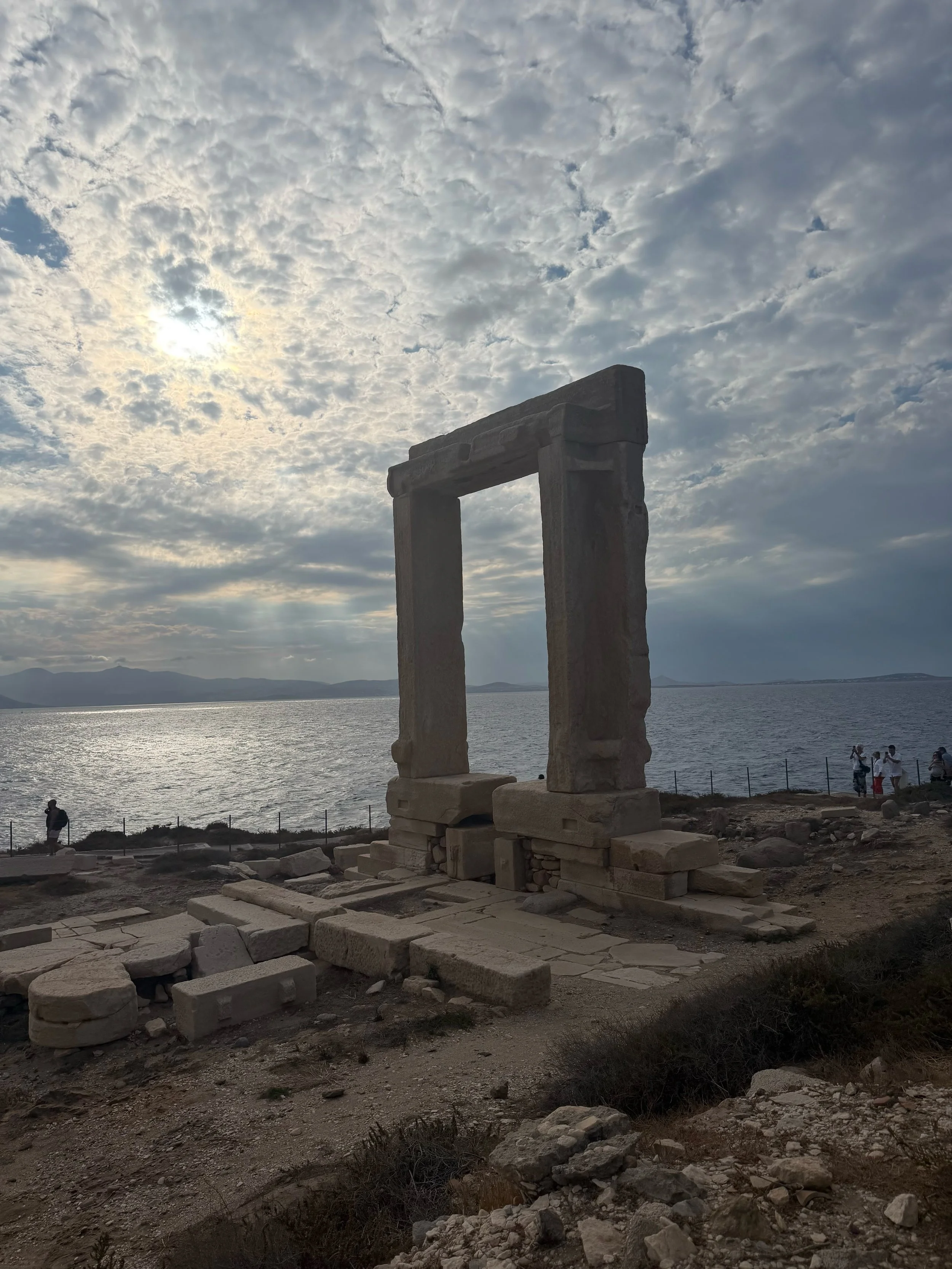
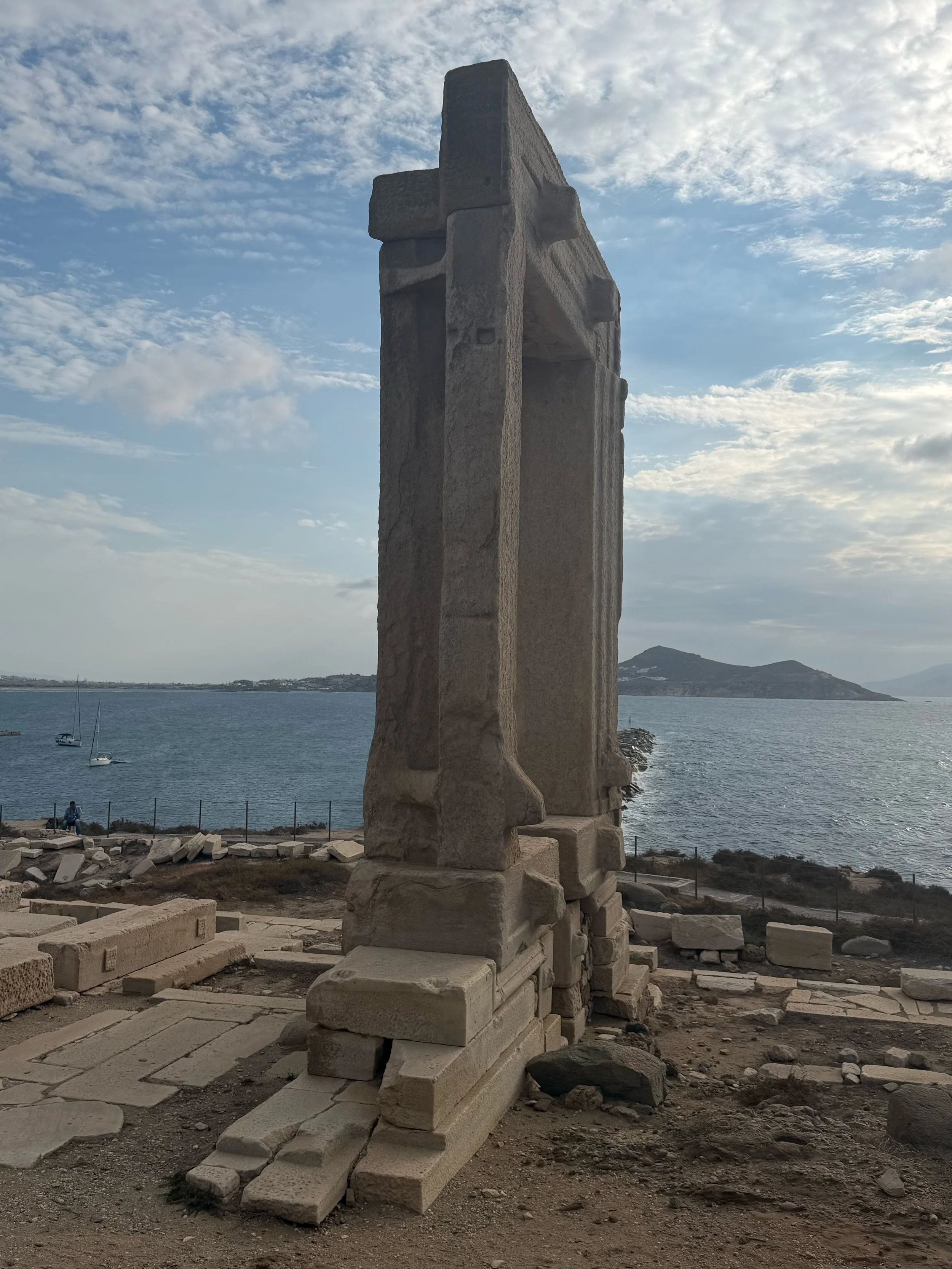
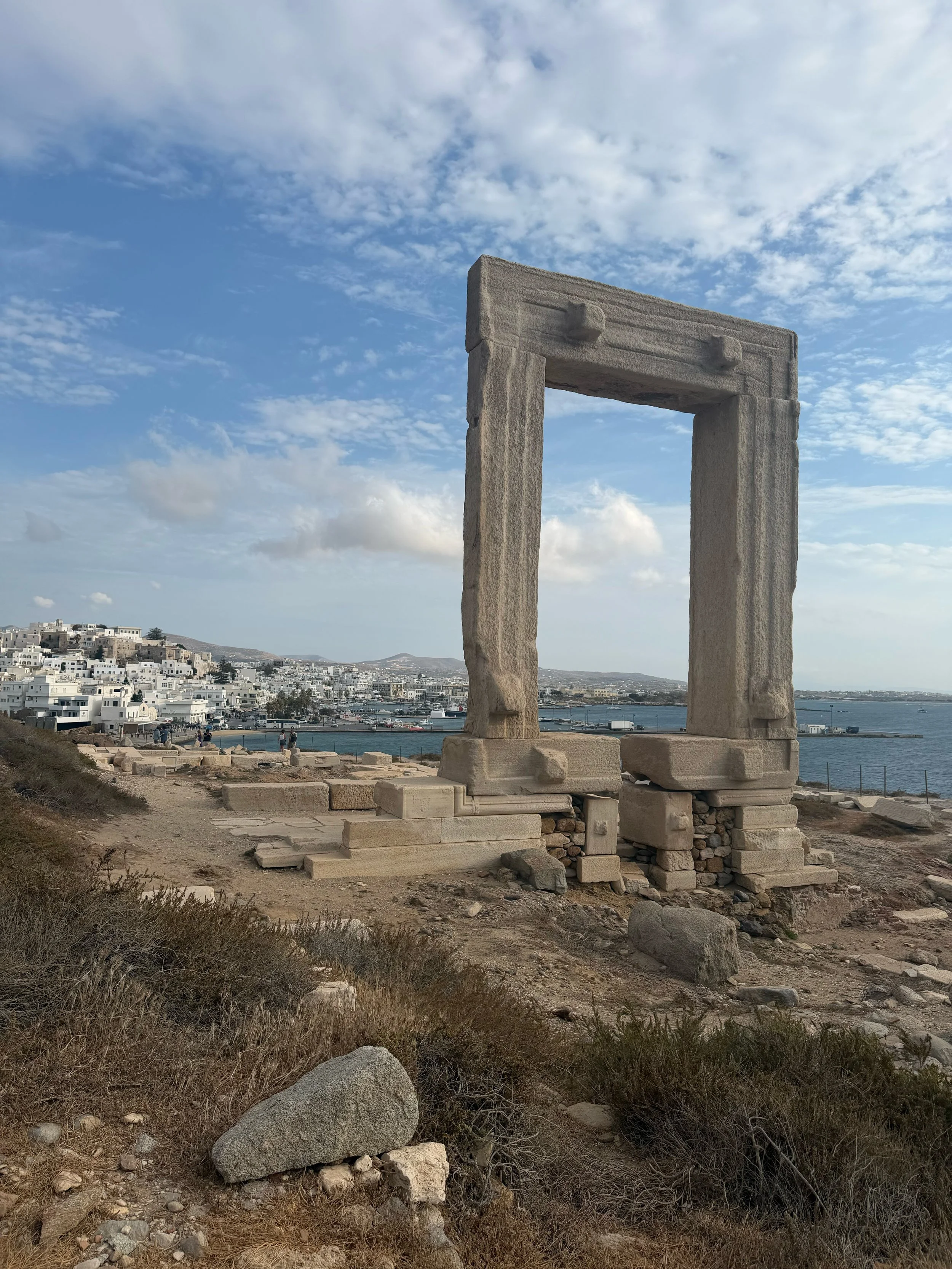
Temple of Apollo
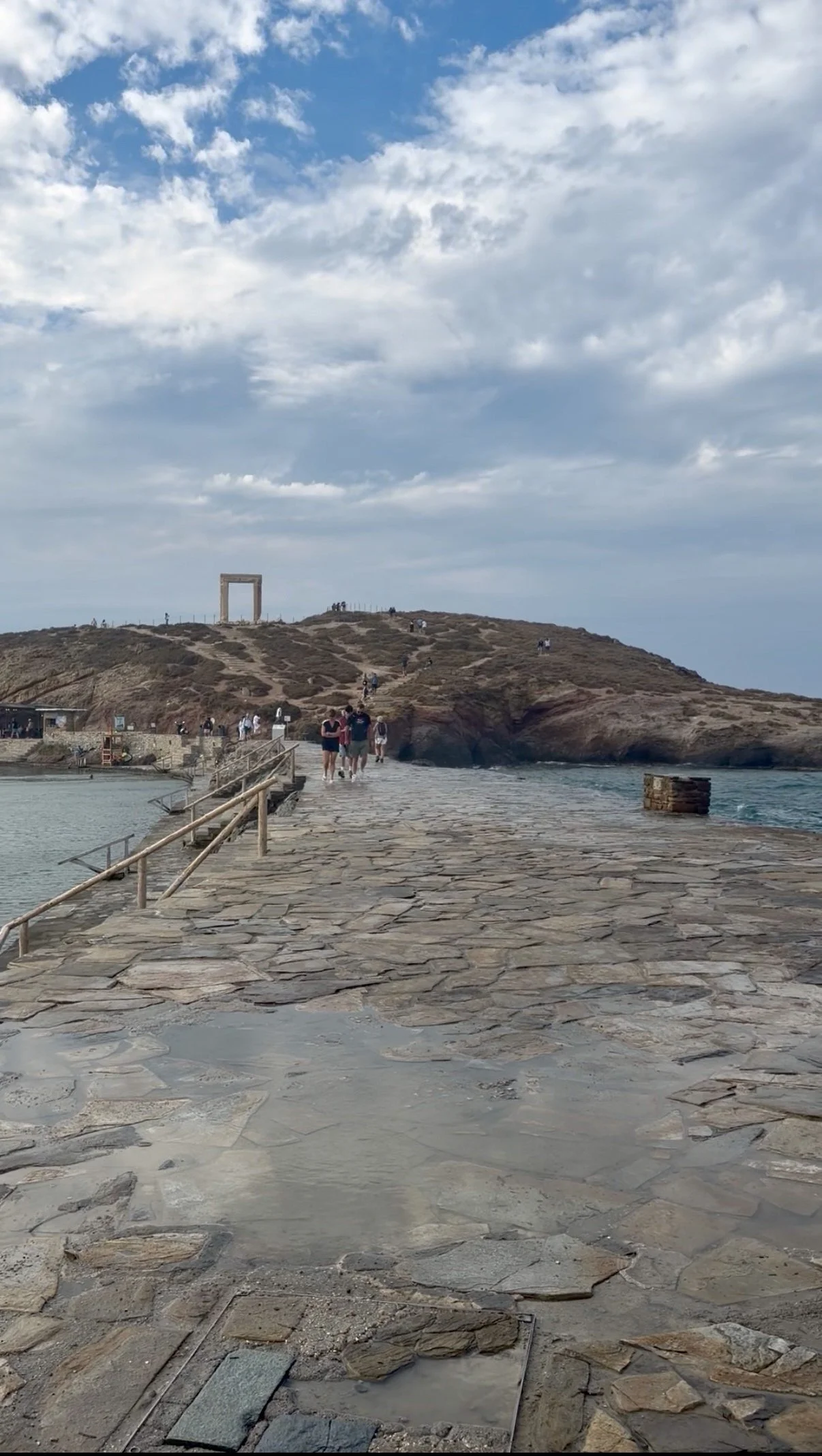
From the center of the port was a path of pilgrimage.
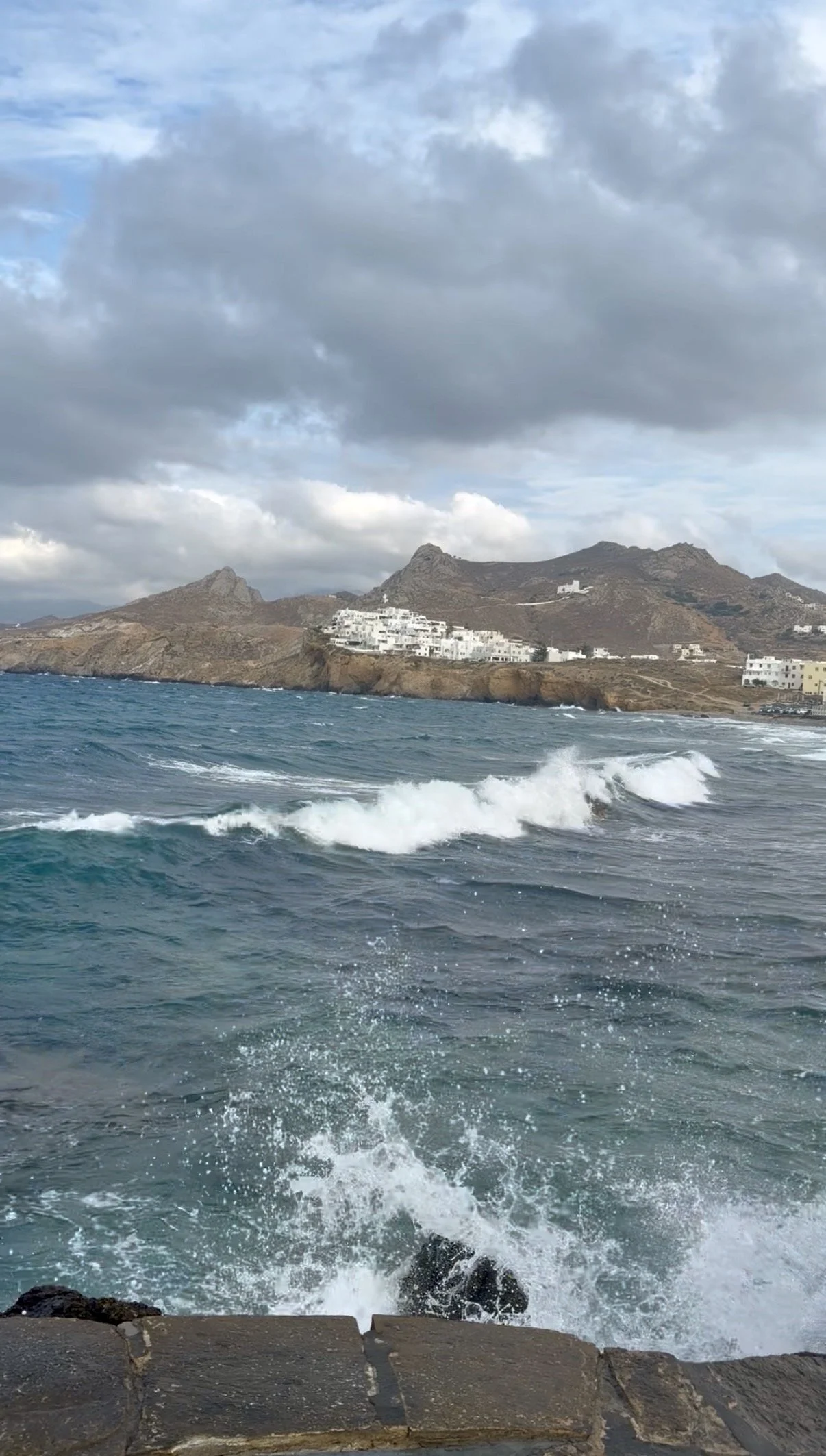
Waves crashing ashore felt baptismal as we ascended the hill to encounter the sacred temple on the small island of Palatia.
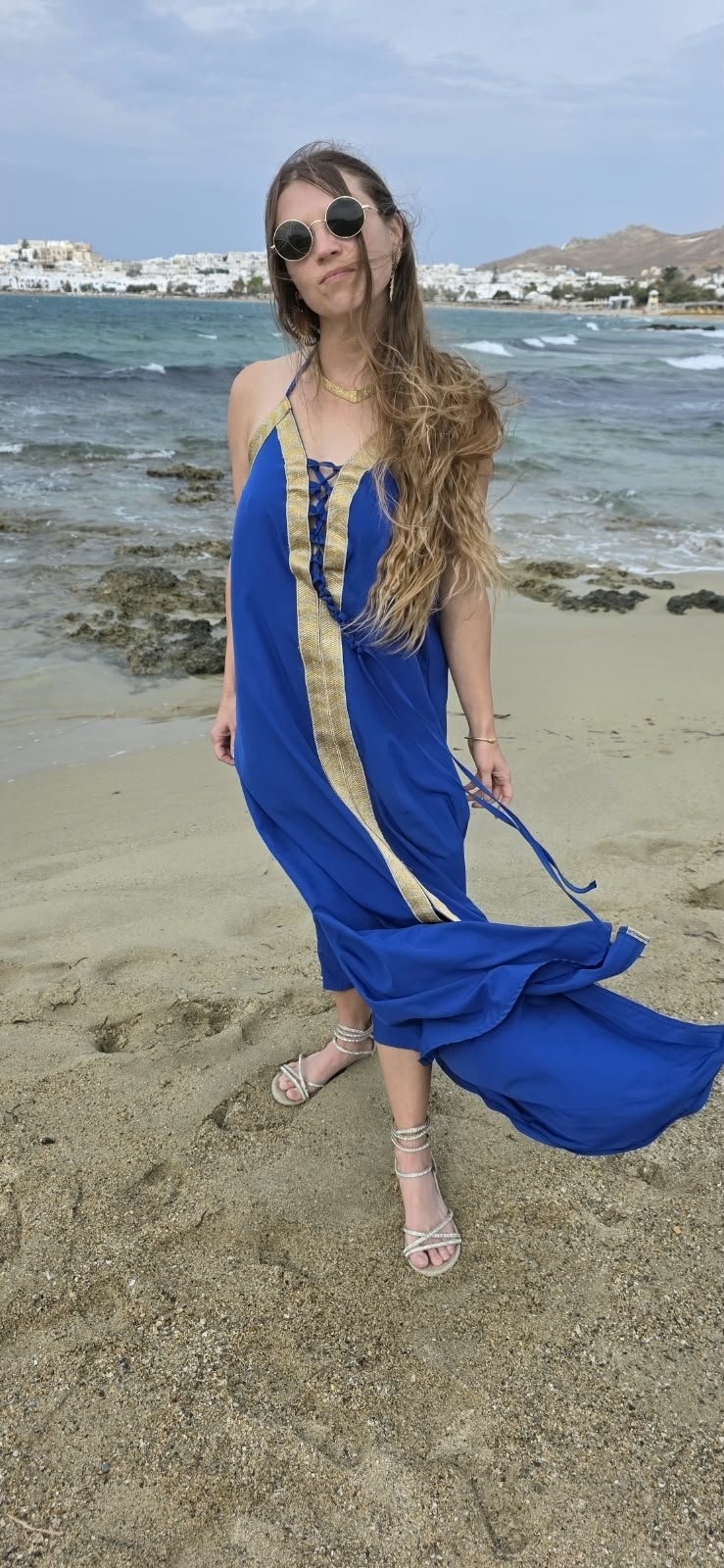
Salt water in my hair instantly gave me dreadlocks.
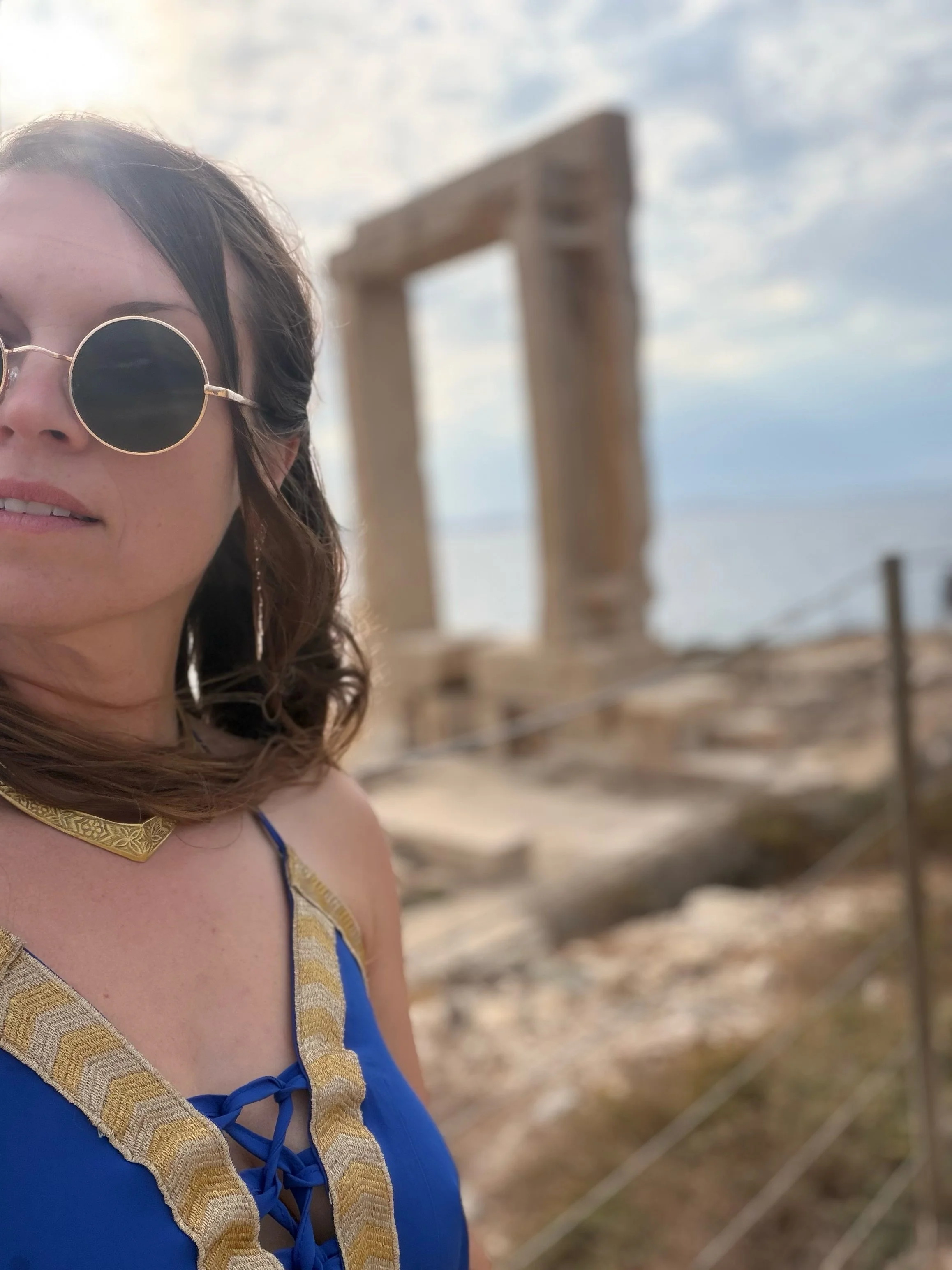
At the summit stood the Portara: sparse, enormous, dramatic.
The marble doorway is what remains of an ambitious temple begun around 530 BCE under Lygdamis, the tyrant who ruled Naxos during a period of extraordinary prosperity. The sanctuary itself was older, but Lygdamis intended to monumentalize it on a scale meant to rival the great temples of the Aegean. His overthrow only a few years later halted construction, leaving the temple permanently unfinished.
The temple occupies the threshold of the island.
Arriving by sea, you encounter it before you encounter the city.
Even unfinished, it commands the harbor.
It felt almost like a campaign for Apollo: the god associated with light, music, prophecy, and order placed prominently at the entrance to the island. Architecture functioning simultaneously as worship, spectacle, and political declaration.
Light and ascension were implied both in the journey and in the deity of praise.
Temple of Dionysus
Apollo required an ascent. Dionysus required a descent.
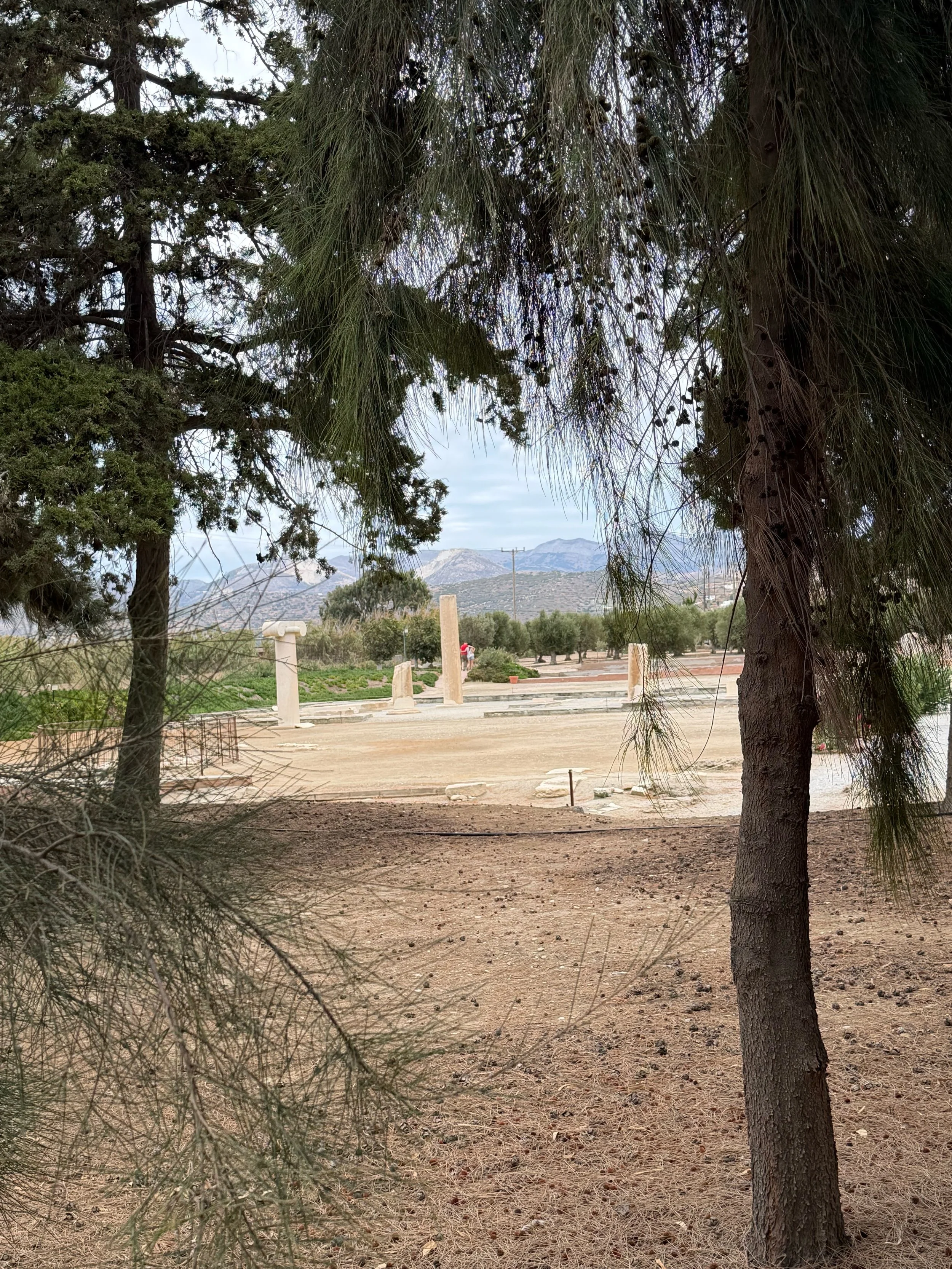
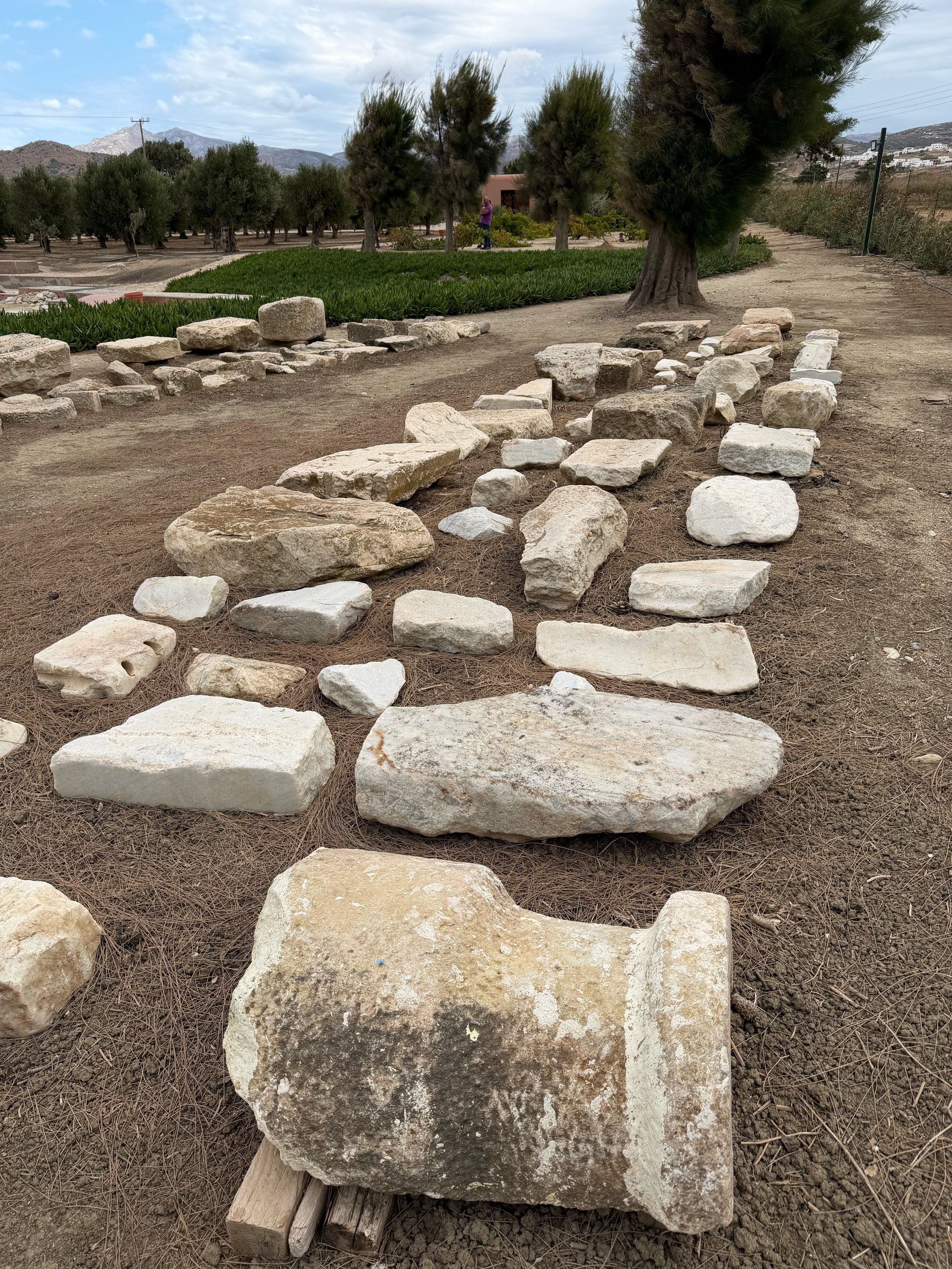
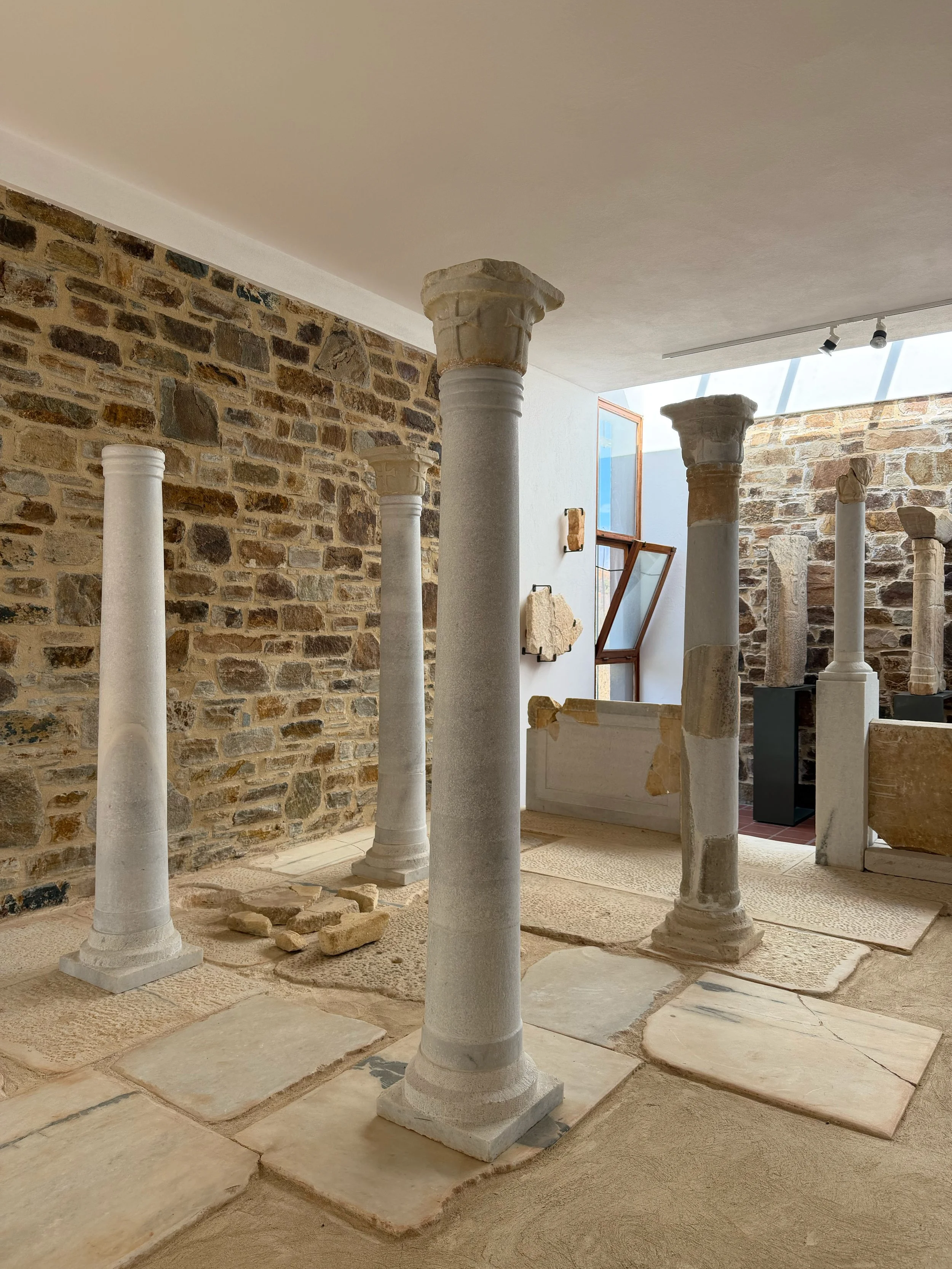
From the entrance to the sanctuary at Yria, the downward path was lined with oleander, olive, and fig trees. Pines stood tall at the far end of the enclosure. The atmosphere was almost the inverse of Apollo: enclosed rather than exposed, vegetated rather than stark, descended into rather than ascended toward.
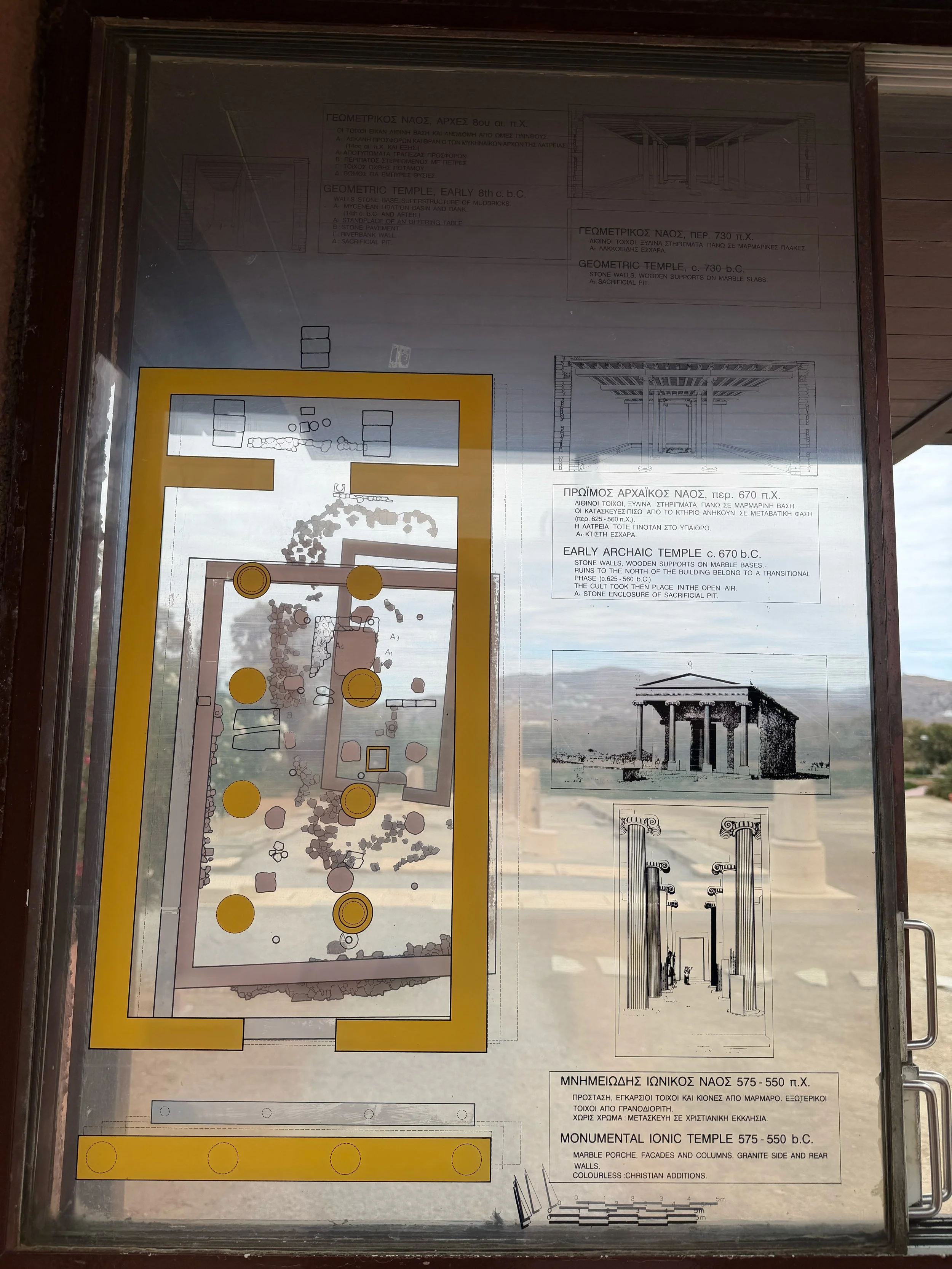
This sanctuary was ancient even by Greek standards. The sacred site had been in use since approximately the fourteenth century BCE. Over centuries, successive temples were constructed over essentially the same sacred ground. By around 580 BCE, a monumental marble temple had emerged there.
Dionysus was particularly important on Naxos. Myth placed him deeply within the island's landscape: Naxian traditions connected him with its mountains, nymphs, vineyards, fertility, wine, and festivals celebrating the agricultural cycle of the vine.
So perhaps it was appropriate that we became unruly.
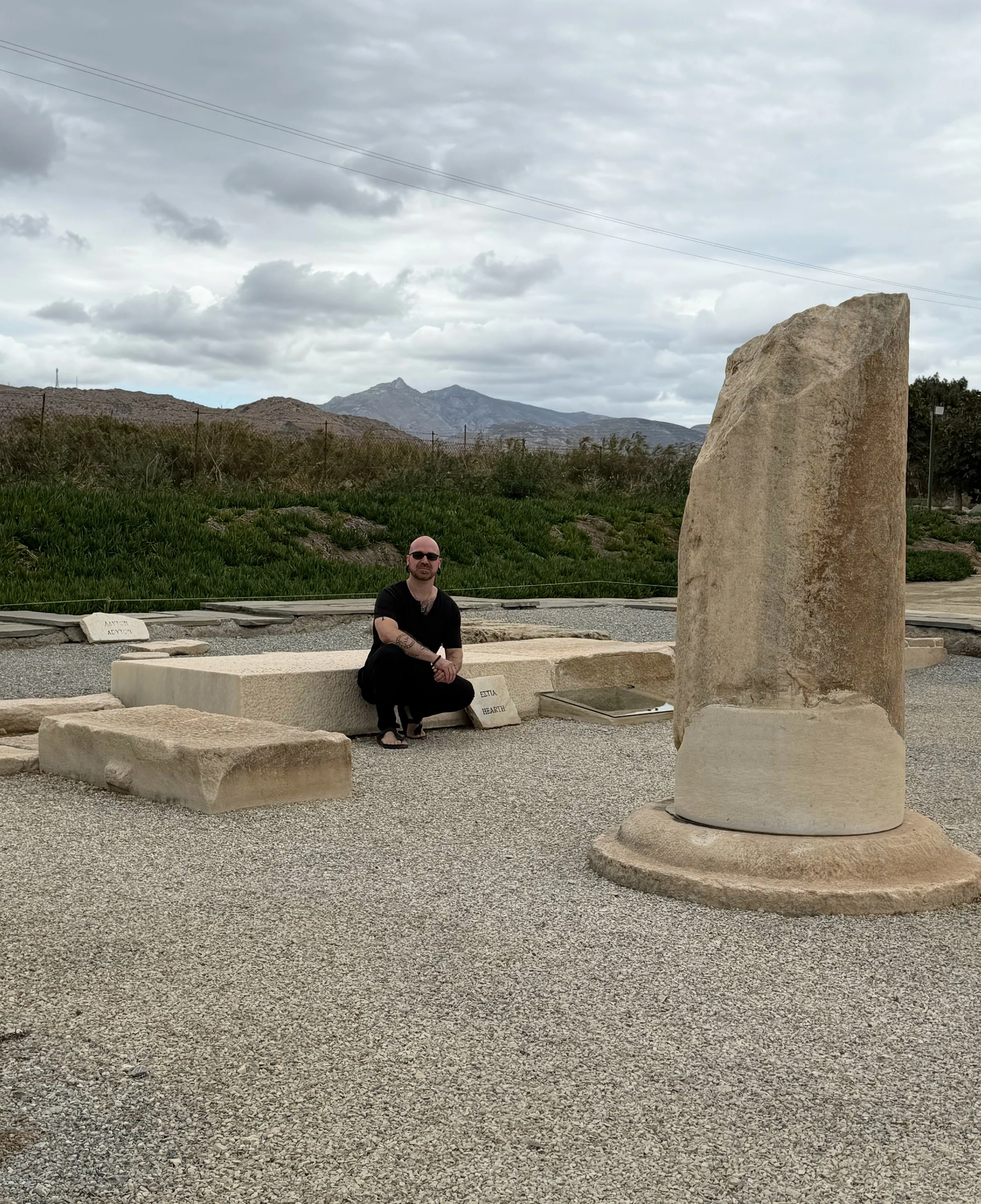
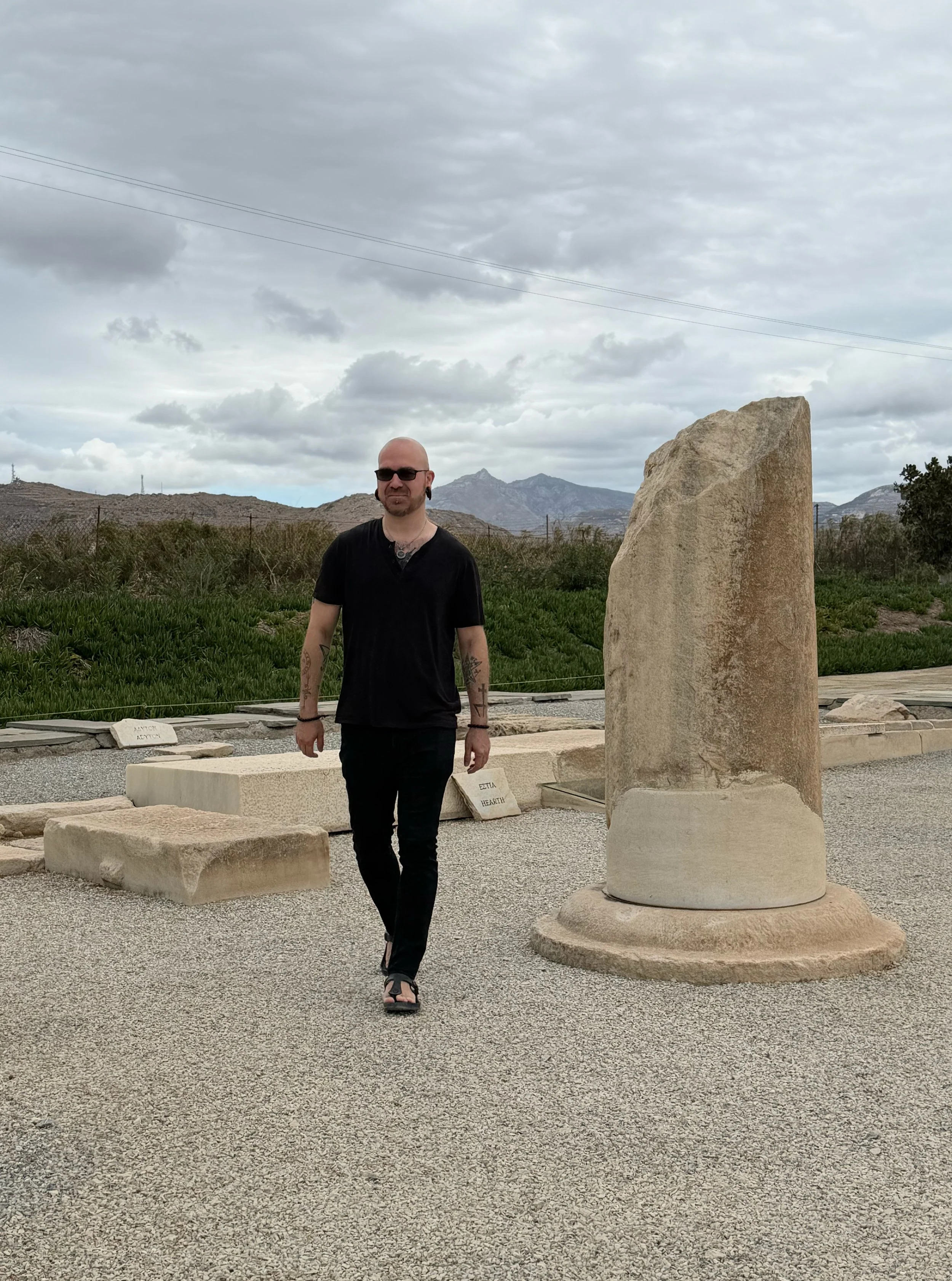
Shea crossed the temple barrier and knelt before the hearth. Shortly after, the surly guards caught him and fussed him out. I wandered toward the far end, near the pine trees, examining pine cones and bird feathers. It didn’t take long for the guard to catch me either. We weren’t kicked out but we were being watched for the chaos we were causing.
How Dionysian.
Before we left, Shea read an Orphic hymn in front of the temple. A prayer to the old gods.
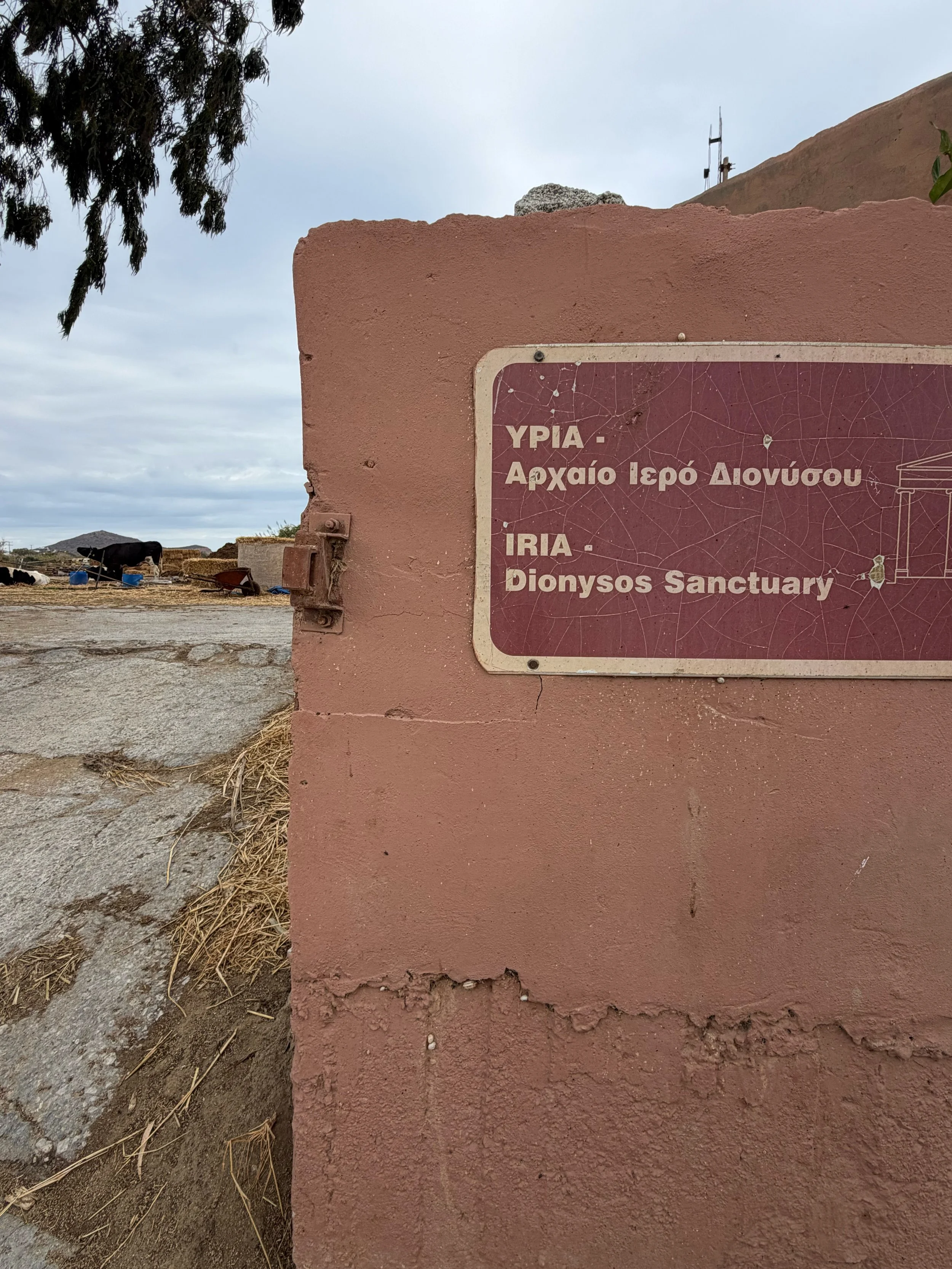
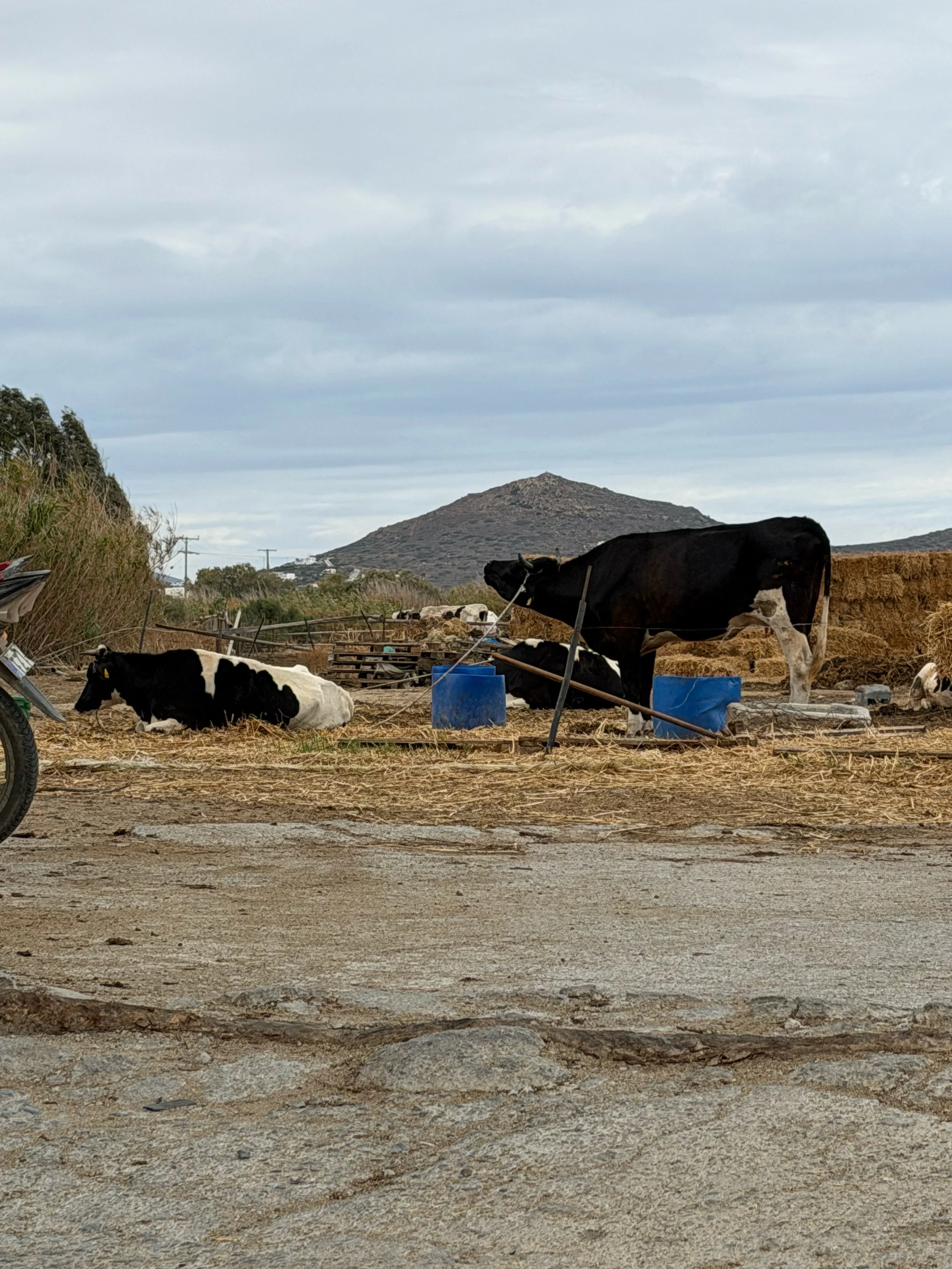
Outside the archaeological enclosure was a goat and cow farm. Near the sign for the sanctuary, I noticed a jawbone lying on the ground.
Sometimes the offerings seem to offer themselves.
The encounter planted the idea for an altar box devoted to Dionysus—an assemblage built from the materials, forms, and memories of the landscape rather than simply an illustration of the god.
Our driver was still some distance away, so we began walking along the road to meet him.
For a moment we were simply walking through the pastoral countryside of Naxos.
Wanting Shea's attention, I said, “Hi.”
“Hello,” he replied.
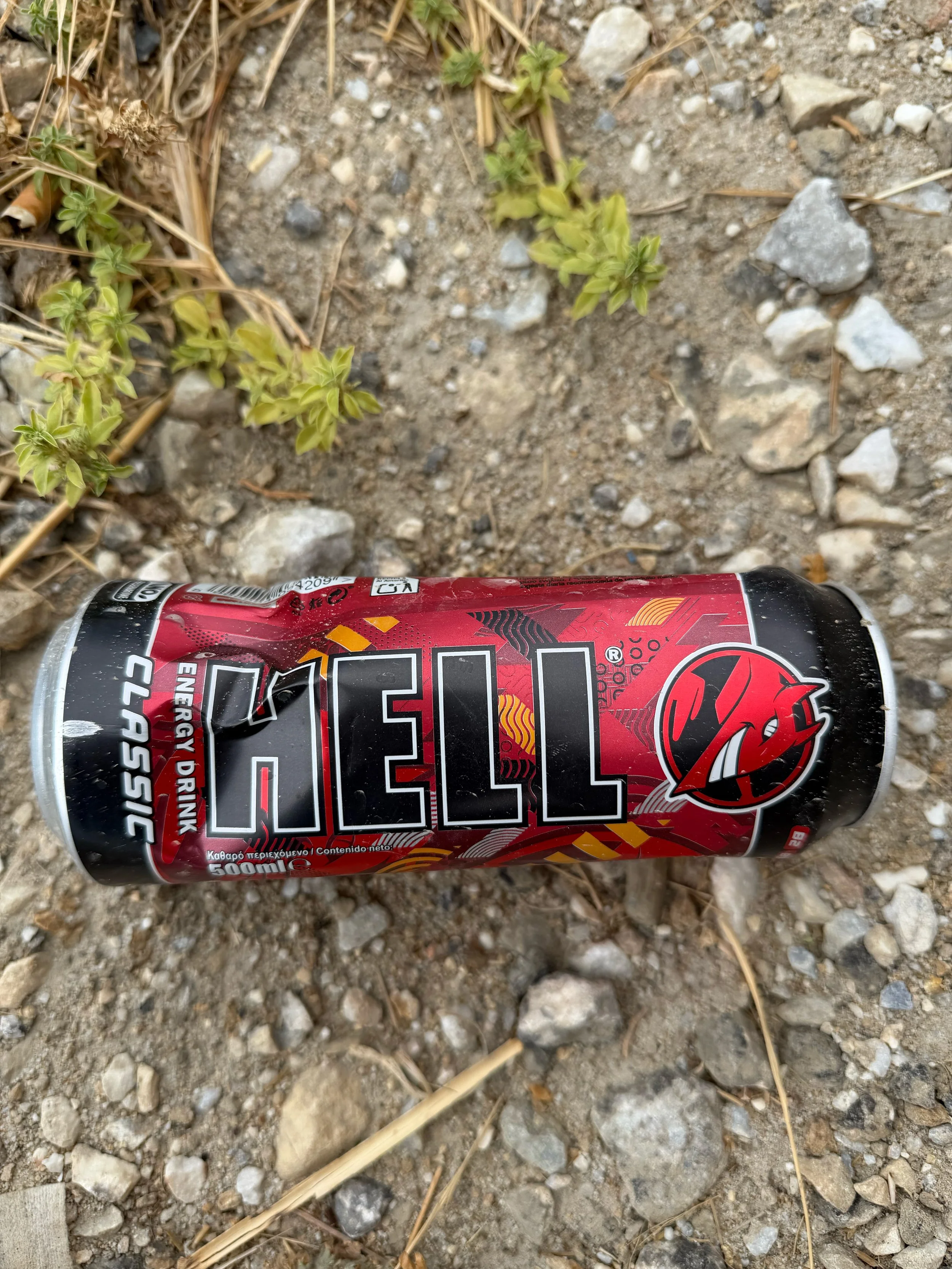
A moment later, on the ground beside us, was a discarded can emblazoned with a single word: HELLO.
Another strange synchronicity.
Temple of Demeter
From Dionysus we traveled inland toward Demeter.
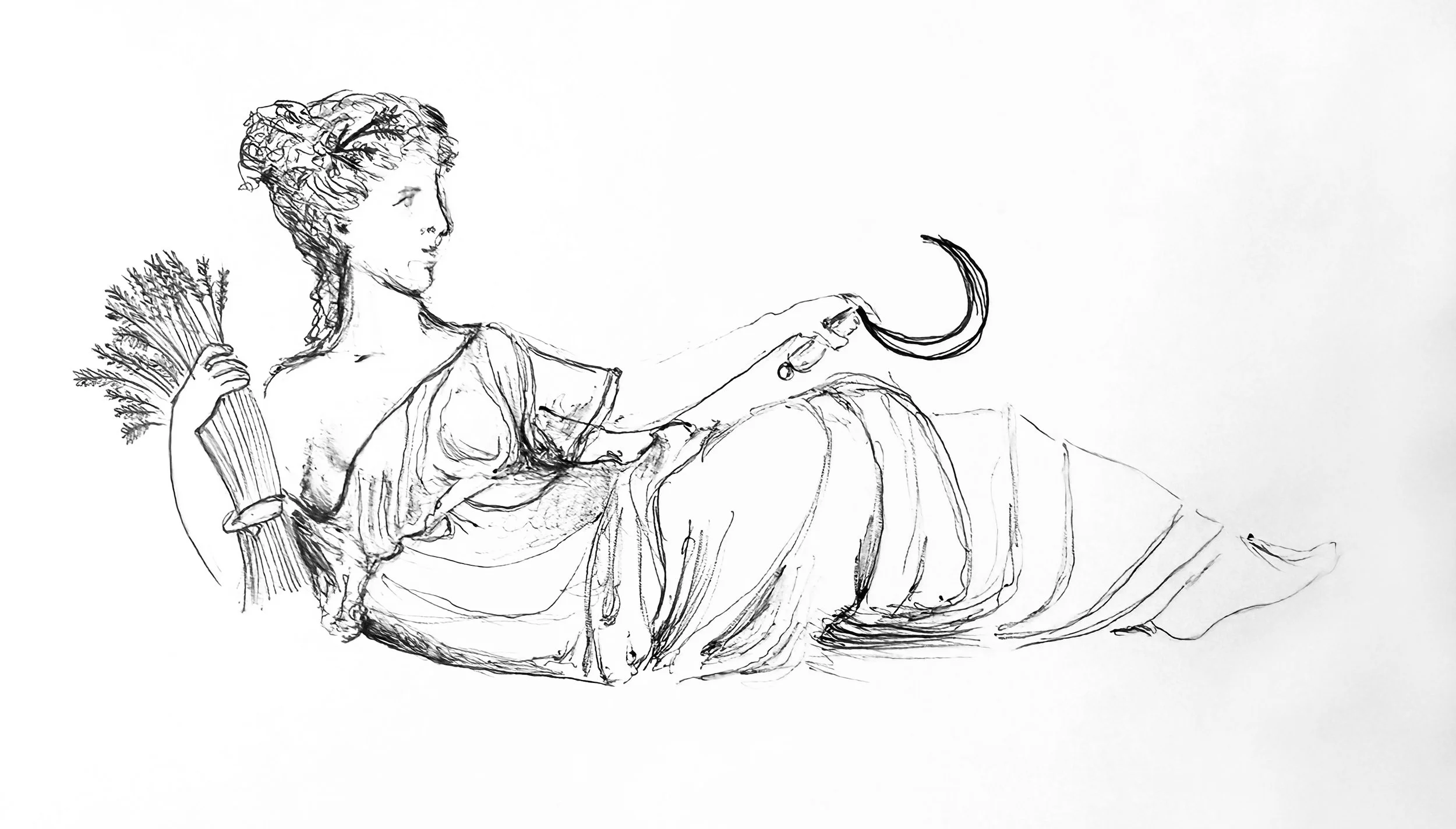
Demeter: goddess of grain, agriculture, fertility, harvest, and the cultivated earth.
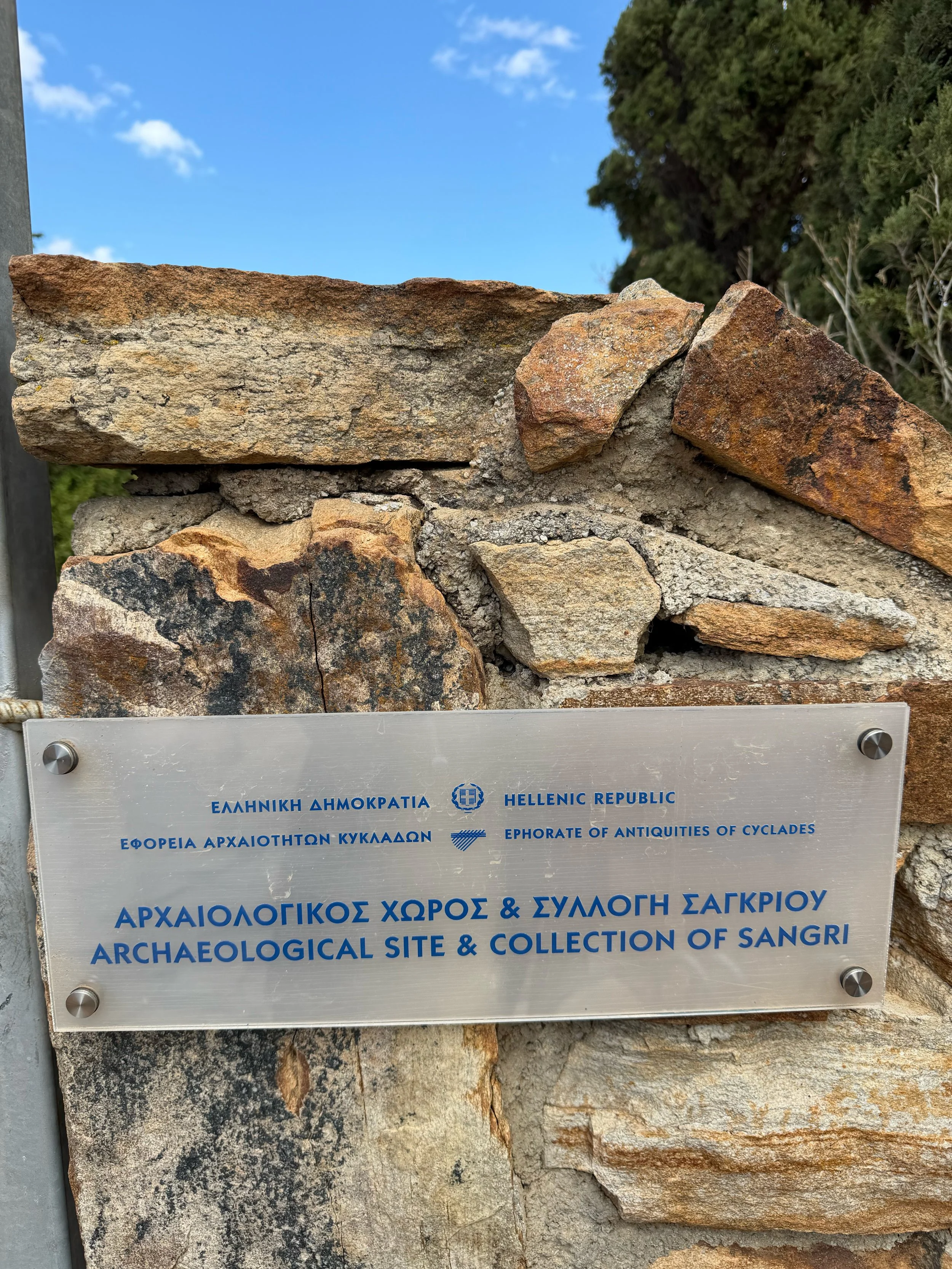
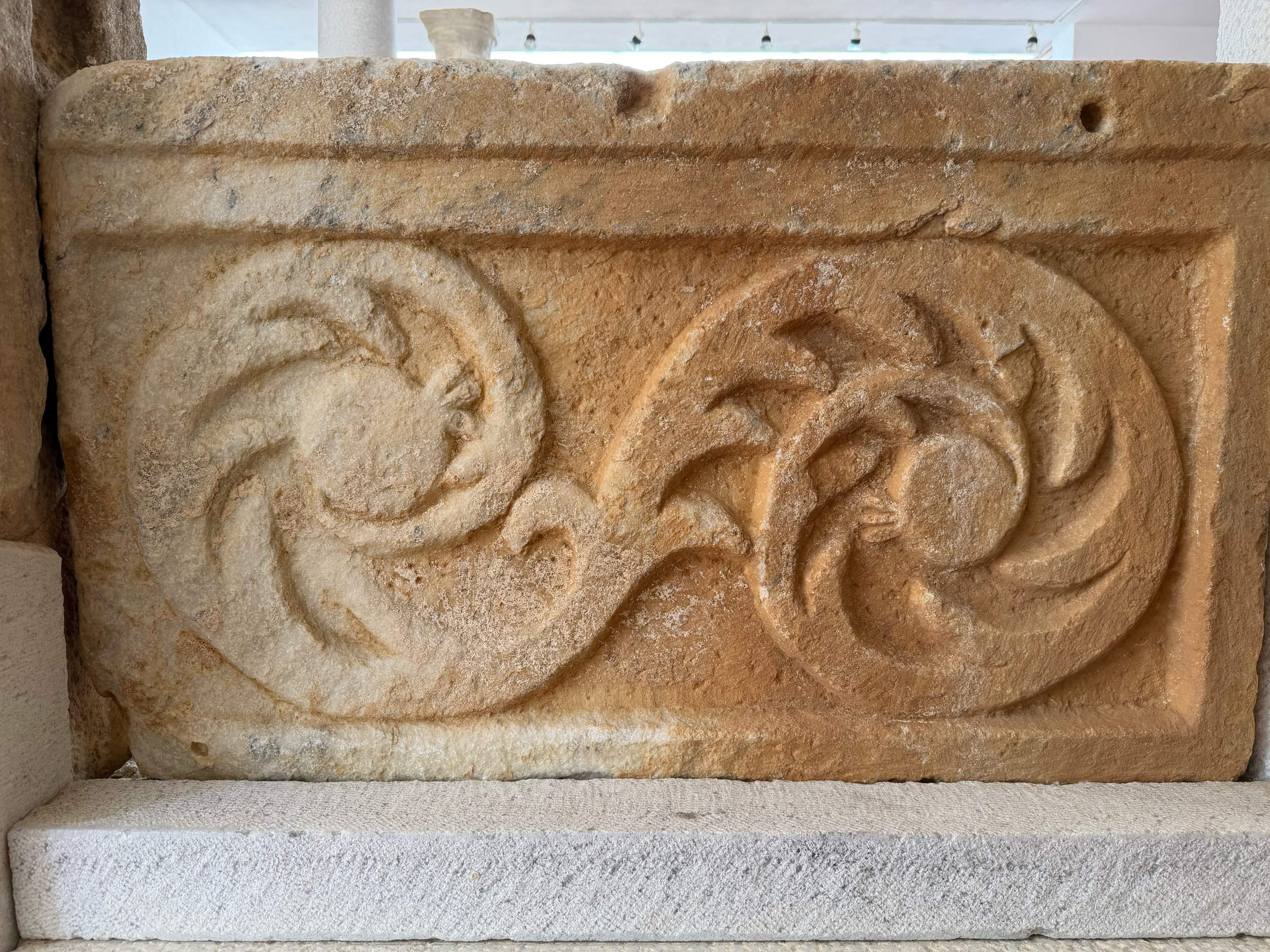
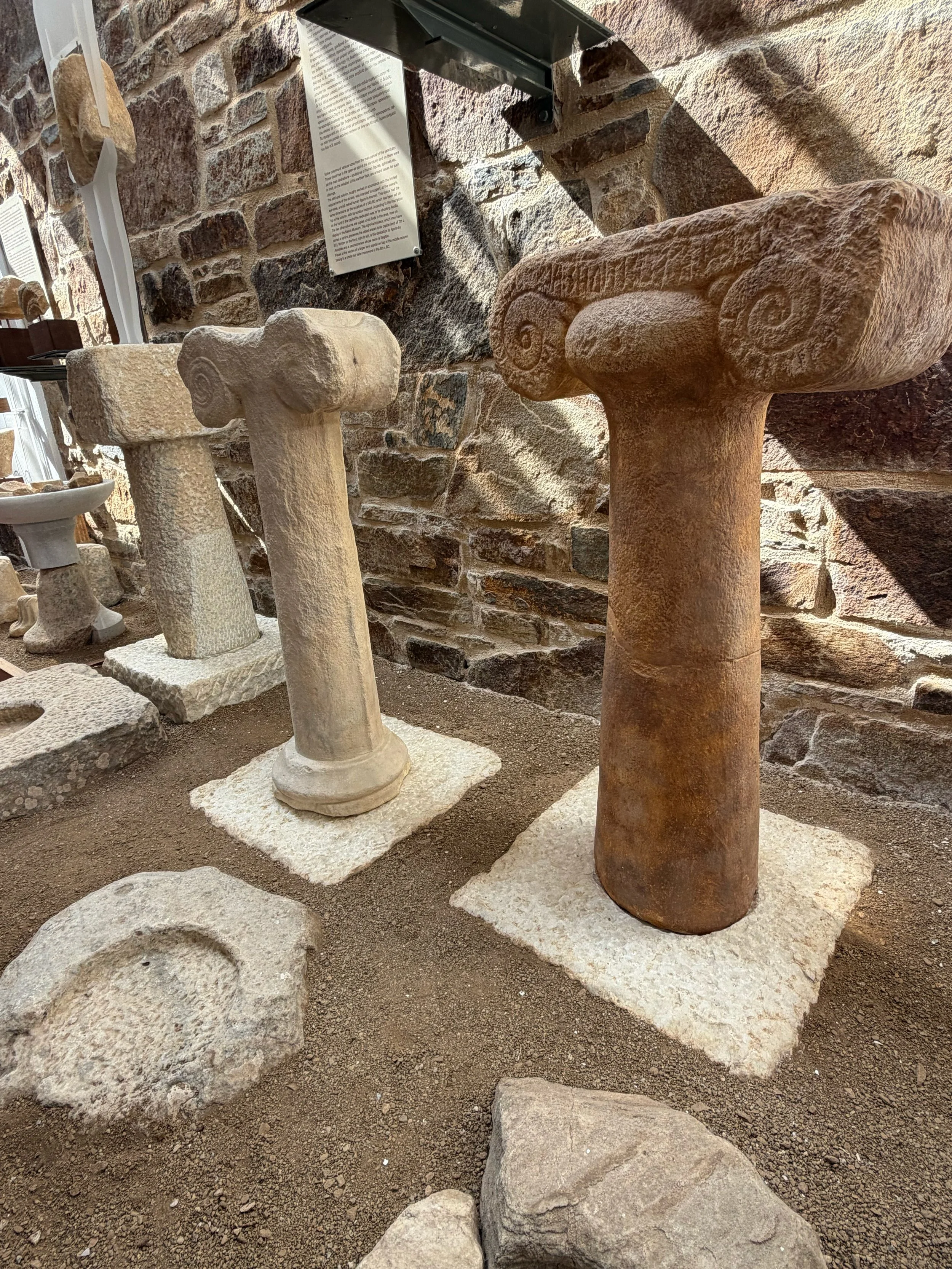
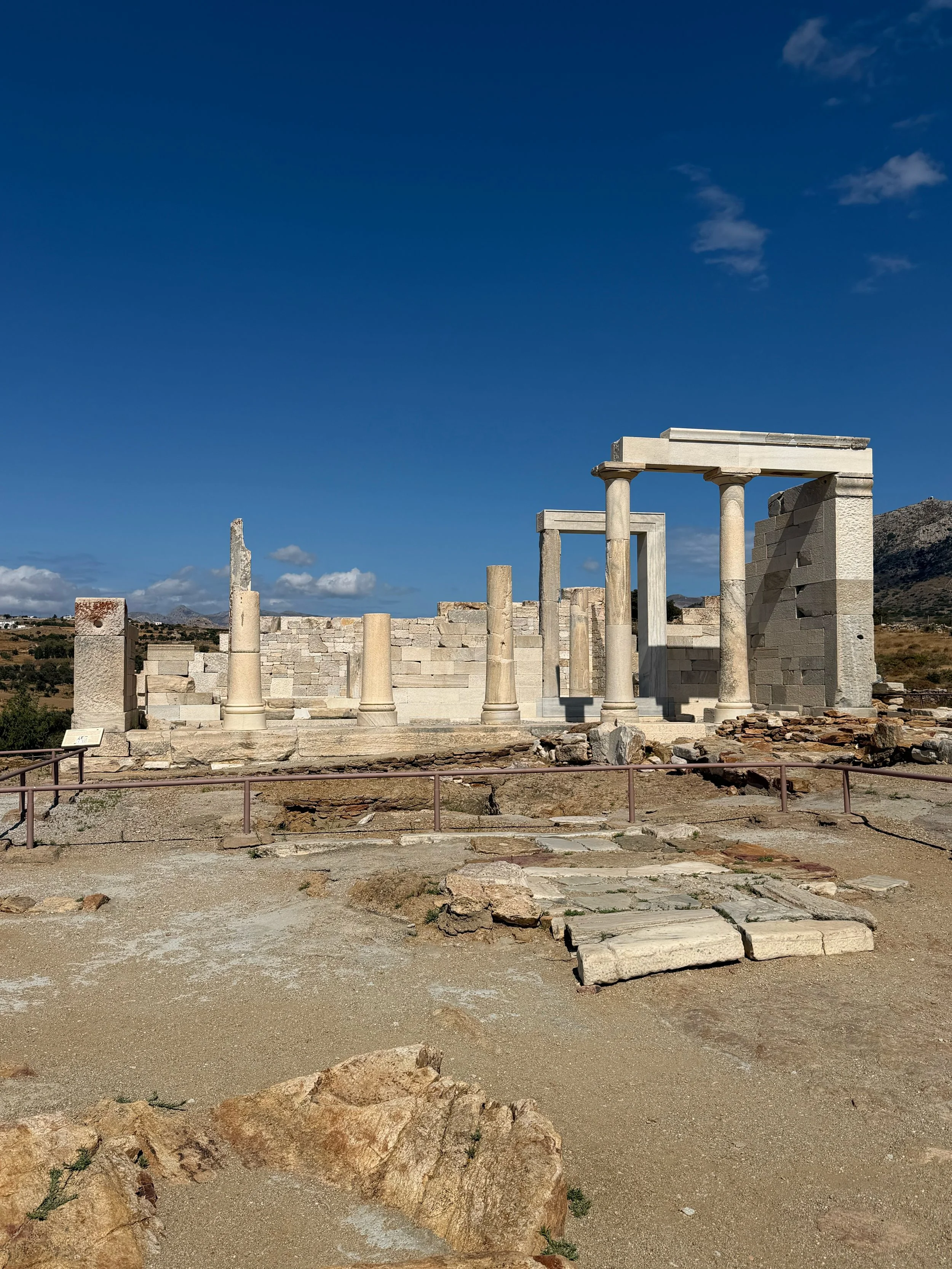
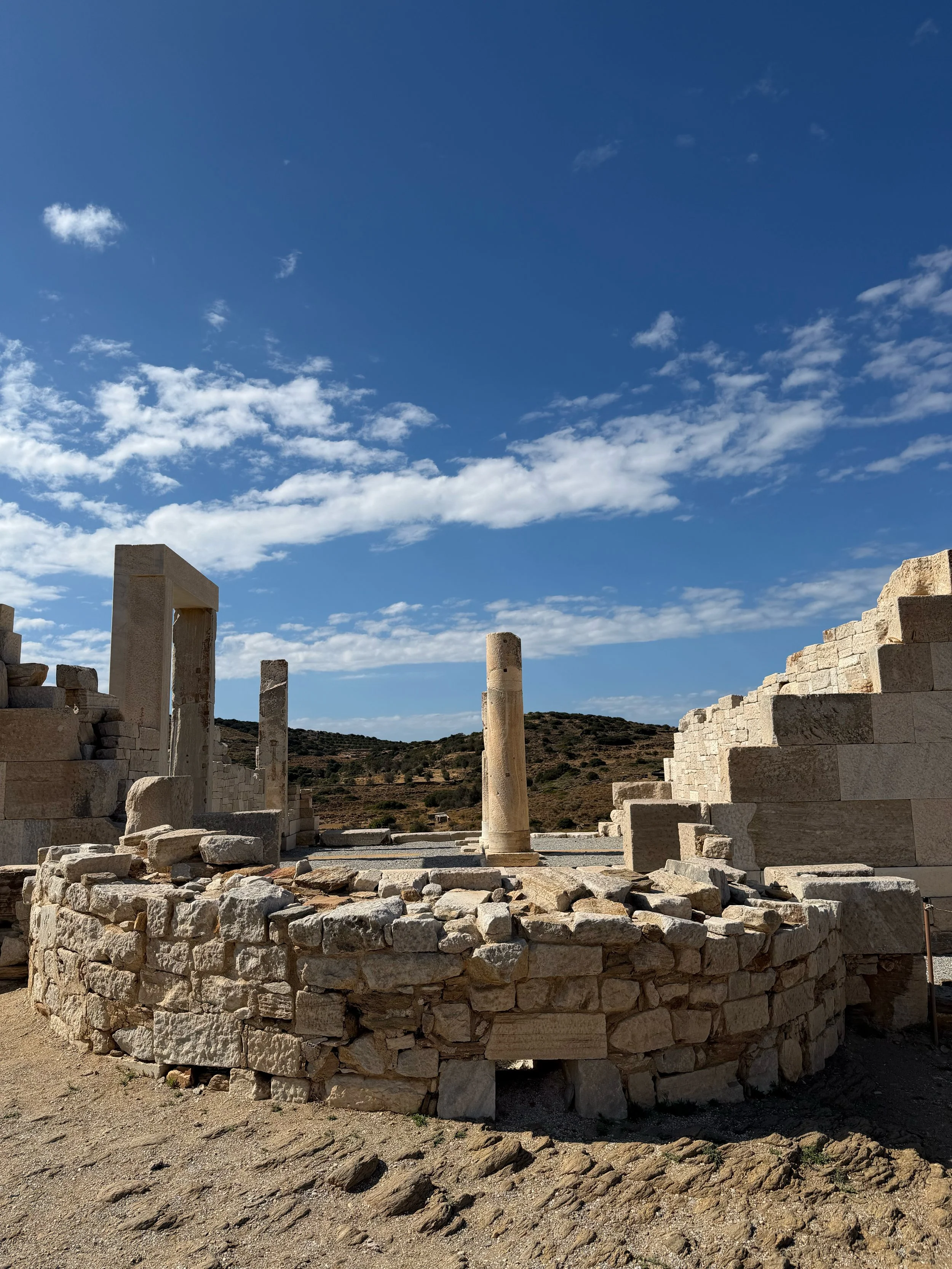
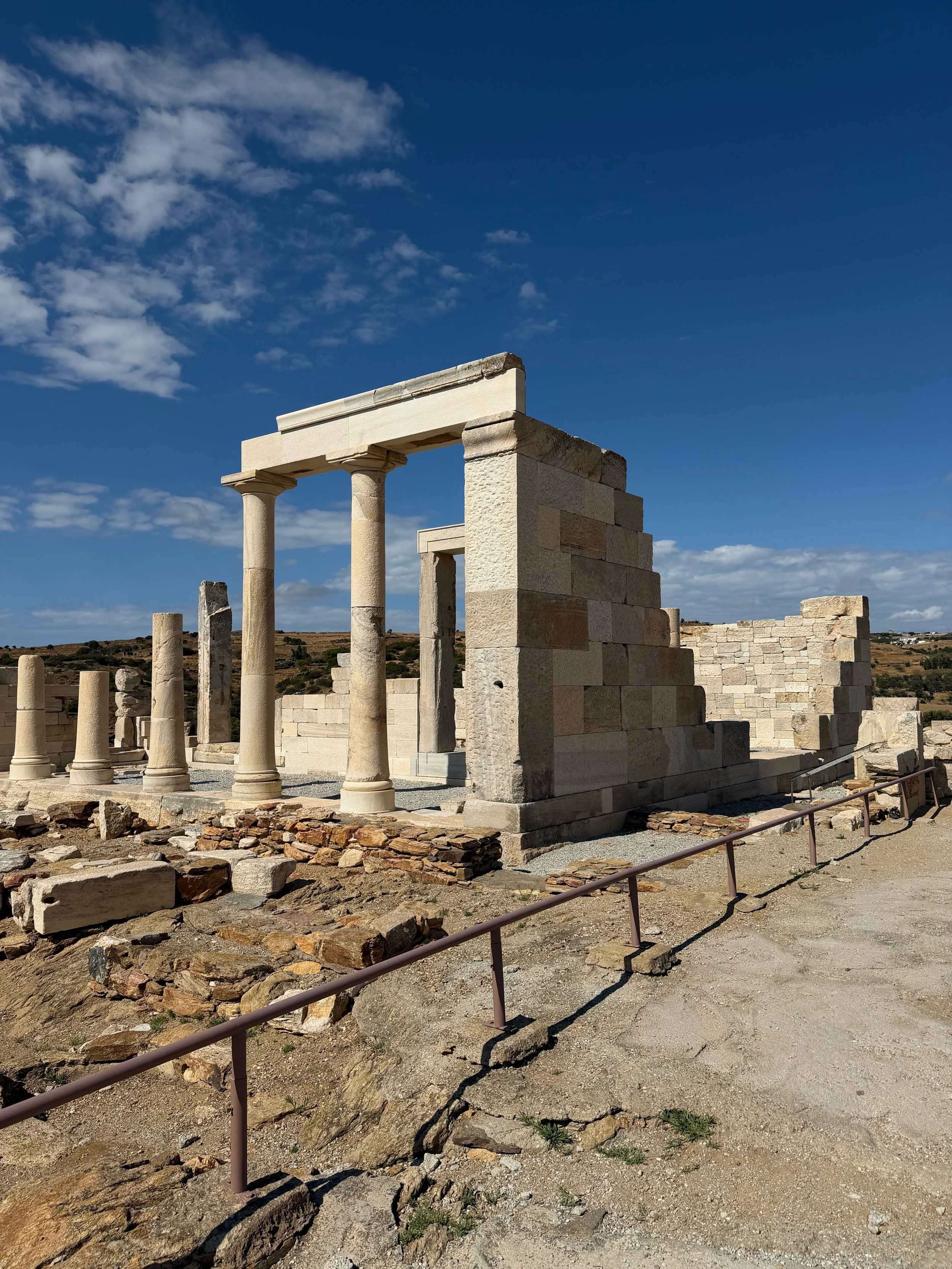
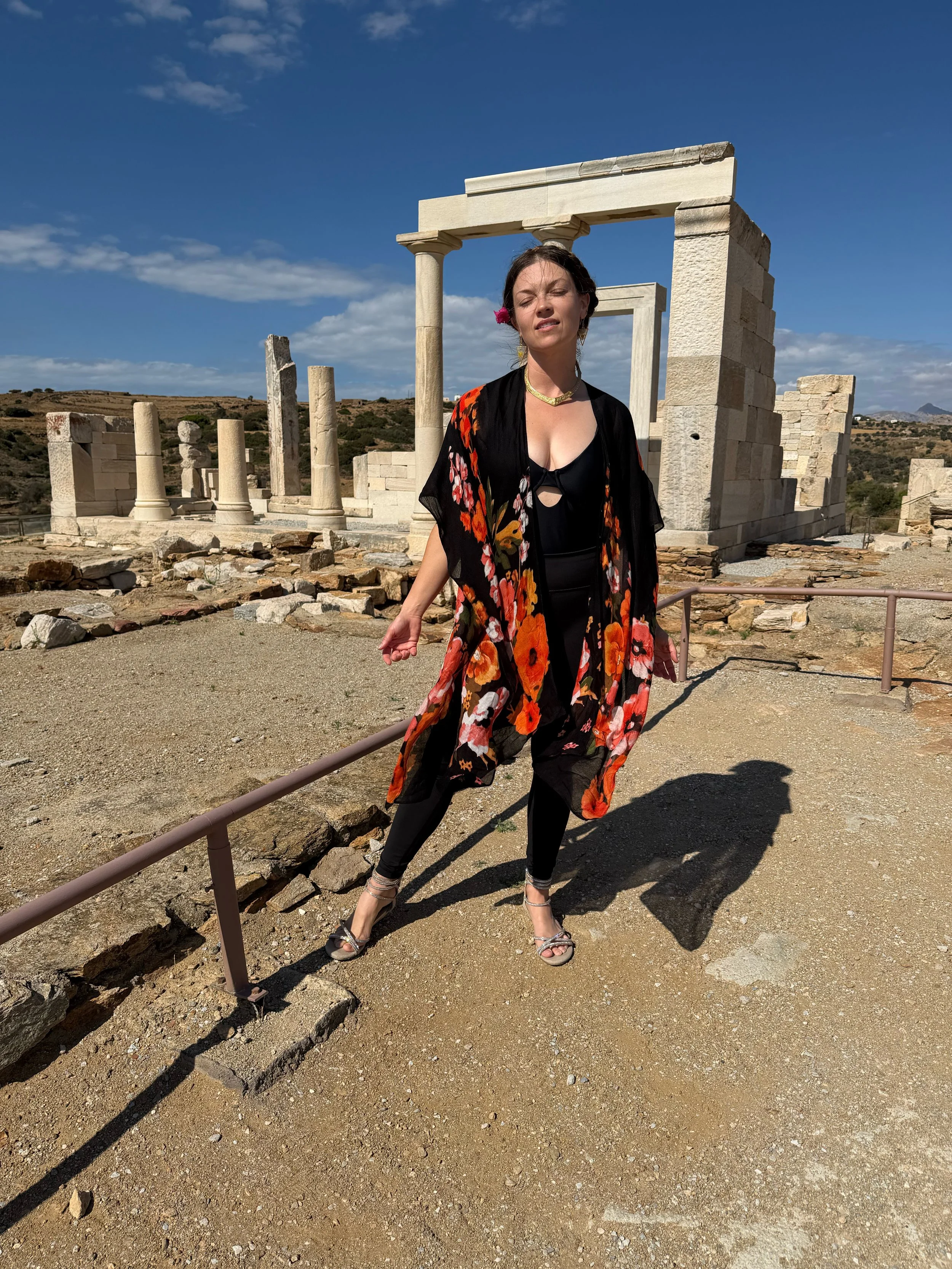
The Temple of Demeter at Gyroulas was constructed around 530 BCE, probably as part of the same ambitious period of Naxian building that produced the unfinished temple of Apollo. The sanctuary was constructed almost entirely from local marble.
The journey took us to higher elevations. Above the ocean, into the mountains and agricultural interior of Naxos.
Fluids were precipitating from my face. Runny nose and tears had begun at Dionysus and continued as we embarked on the journey to Demeter. The leaking fluids made me dehydrated as we ascended to the Temple. I had forgotten my sunglasses for the day, so the sun blinded me. And I had forgotten the seed paper offering I intended to bring. What I did have was a backpack full of tea bags. So I ripped them open and offered the dried herbs to the goddess of agriculture. The wind immediately took them.
There was something appropriate about watching an offering to Demeter scatter back into the landscape.
The architecture itself incorporated light. The marble roofing system allowed diffuse sunlight to enter the enclosed sacred space from above. Standing there without sunglasses, squinting into the Cycladic sun, a relationship between stone and light felt particularly immediate. And everywhere, stone glittered.
Naxos is famous not only for marble but for emery—a dark, exceptionally hard rock rich in corundum that has been mined on the island since antiquity. Its abrasive qualities made Naxian emery useful for working and polishing stone; the same geological material that emerged from the island could therefore participate in transforming its marble.
Driving back toward the beach, we discovered the charming town of Chalki, where we stopped for Aperol Spritz and wild game.
Cats begged at my feet as I ate fresh rabbit.
Another Threshold
We were experiencing Naxos through these transitions: coast to countryside, exposure to enclosure, Apollo to Dionysus to Demeter.
And always, underneath the mythology, there was geology.
Marble quarried from mountains became temples. Emery shaped and polished marble into devotional artifacts. Agricultural soil became the domain of Demeter. Vineyards were the territory of Dionysus. An island at the entrance to a harbor was a platform for Apollo to greet travelers arriving from the sea.
The gods were not separate from the landscape.
The landscape gave them form.
Resources
Ephorate of Antiquities of the Cyclades, Hellenic Ministry of Culture. “The Sanctuary of Delian Apollo (Portara), Naxos.”
Historical and archaeological information on the sanctuary at Palatia, the earlier cult of Apollo, Lygdamis's monumental temple project beginning around 530 BCE, and the temple's abandonment following his overthrow in 524 BCE.
https://cyclades.culture.gov.gr/en/location/the-sanctuary-of-delian-apollo-portara-naxos/
Ephorate of Antiquities of the Cyclades, Hellenic Ministry of Culture. “The Sanctuary of Dionysus at Yria, Naxos.”
Archaeological history of the sanctuary at Yria, including its use from the 14th century BCE, successive phases of temple construction, the monumental marble temple begun around 580 BCE, ritual activity, and the sanctuary's importance in the development of monumental Greek marble architecture.
https://cyclades.culture.gov.gr/en/location/the-sanctuary-of-dionysus-at-yria-naxos/
Ephorate of Antiquities of the Cyclades, Hellenic Ministry of Culture. “The Archaeological Collection and the Archaeological Site of Sangri, Naxos.”
Archaeological information on the sanctuary of Demeter at Gyroulas, its construction around 540–520 BCE, association with the building program of Lygdamis, use of Naxian marble, and the marble roofing system that allowed diffuse light to enter the temple interior.
https://cyclades.culture.gov.gr/en/location/the-archaeological-collection-and-the-archaeological-site-of-sangri-naxos/
Naxos and the Small Cyclades. “Dionysus.”
Background on the mythology and cult of Dionysus on Naxos, including the god's association with the island's fertility, vineyards, wine, and seasonal Dionysian festivals.
https://www.naxos.gr/dionysus/?lang=en
Naxos and the Small Cyclades. “Emery.”
Geological information on Naxian emery, its high corundum content, exceptional hardness, occurrence on Naxos, and long history as an abrasive and polishing material.
https://www.naxos.gr/emery/?lang=en
Naxos and the Small Cyclades. “Historic Timeline.”
Historical context for Archaic Naxos, its role in the development of monumental marble architecture, and the use of Naxian emery in the abrasion and polishing of marble works.
https://www.naxos.gr/historic-timeline/?lang=en