Scaling Reality
How does the physical structure of the Earth shape the way human beings perceive, imagine, and experience the world?
Scaling Reality was my undergraduate honors thesis in Fine Art, completed alongside minors in geology, philosophy, and communications. The work explored the simultaneous existence of microscopic and macroscopic scales of reality—as above, so below. I was fascinated by the relationship between the world we inhabit and the micrometer-sized architectures revealed through scanning electron microscopy of minerals.
These paintings accompanied that thesis.
Fifteen years later, while driving through Wisconsin's Driftless Area and writing about geology, landscape, and ritual, I found myself thinking about this body of work again.
A few years before graduating, I worked in a geology laboratory in Belle Chasse, Louisiana, a subsidiary of Freeport-McMoRan. Our laboratory analyzed drill core and ore samples that informed exploration and production at the world's largest copper and gold mine.
While that work introduced me to applied geology, another opportunity profoundly shaped my artistic practice.
Through my crystallography professor, Dr. Al Falster—experimental chemist, researcher, mineralogist, and now curator at the Maine Mineral Museum—I gained access to scanning electron microscopy. Suddenly, minerals were no longer simply specimens held in my hand. Entire landscapes emerged within them. Grain boundaries resembled rivers. Cleavage planes became architecture. Crystal faces reflected hidden atomic order. The microscope changed my sense of scale. And thus changed my understanding of reality.
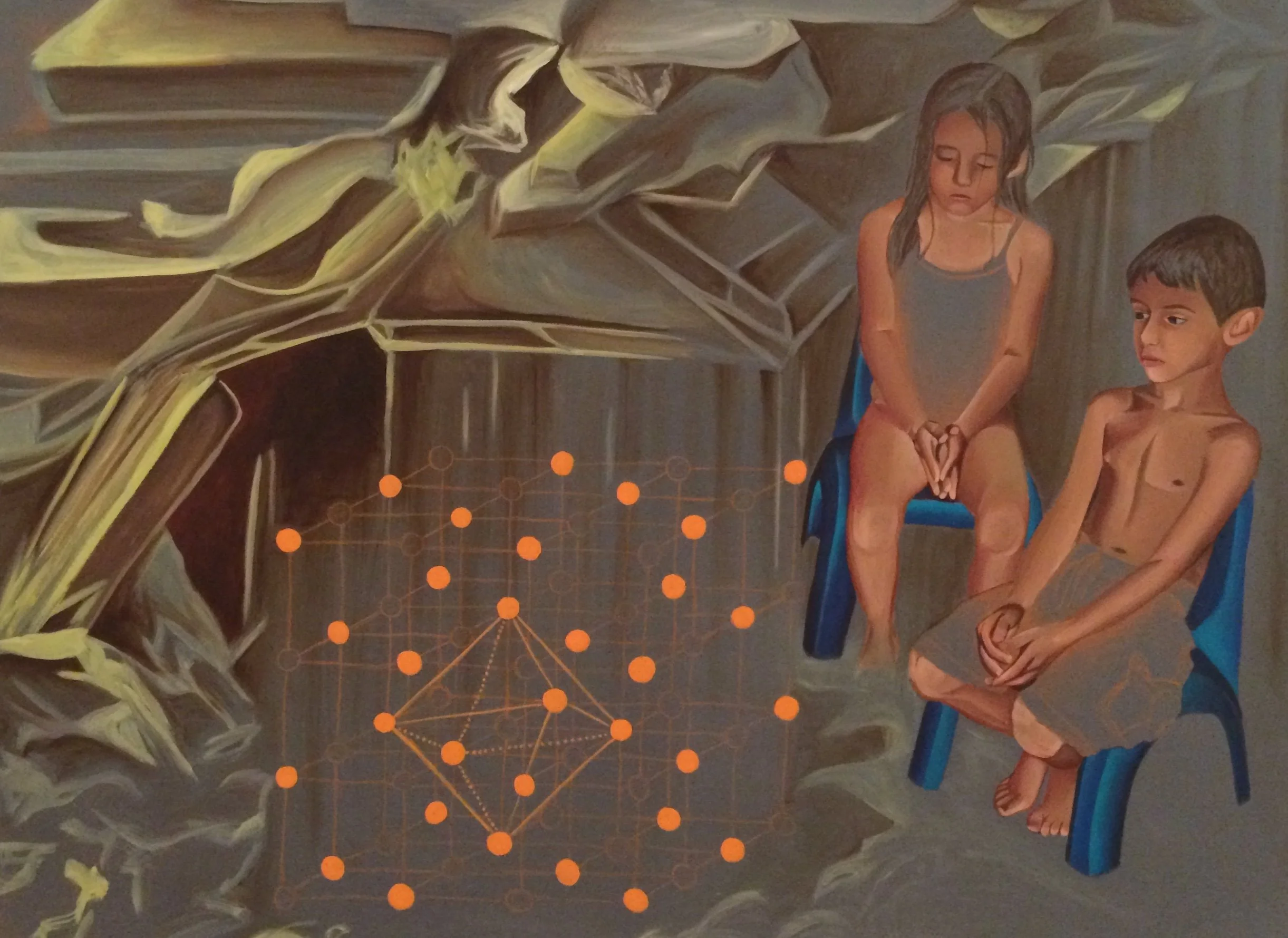
That realization found its way into my paintings. The figures inhabit spaces where human experience and microscopic crystalline geometry coexist.
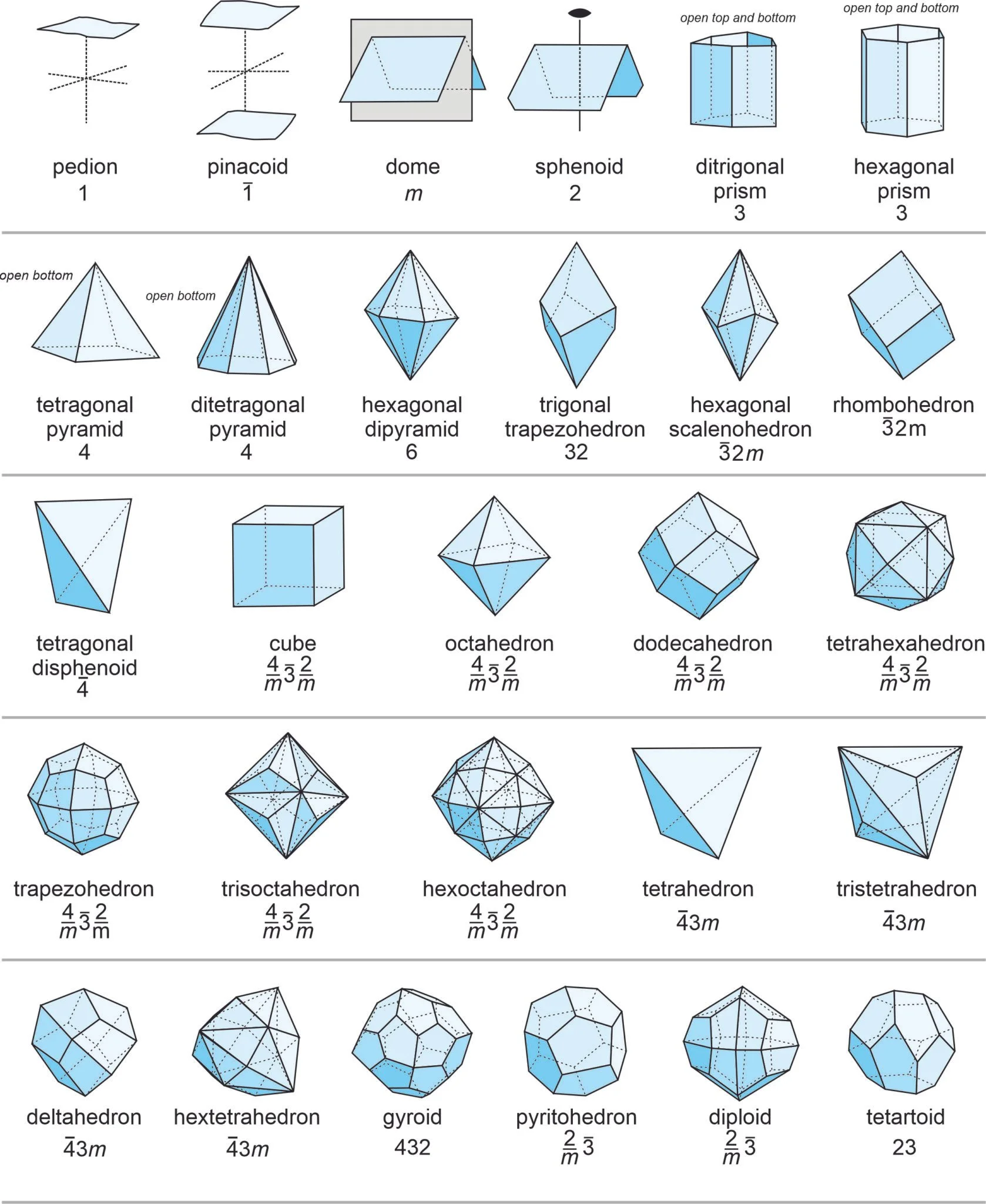
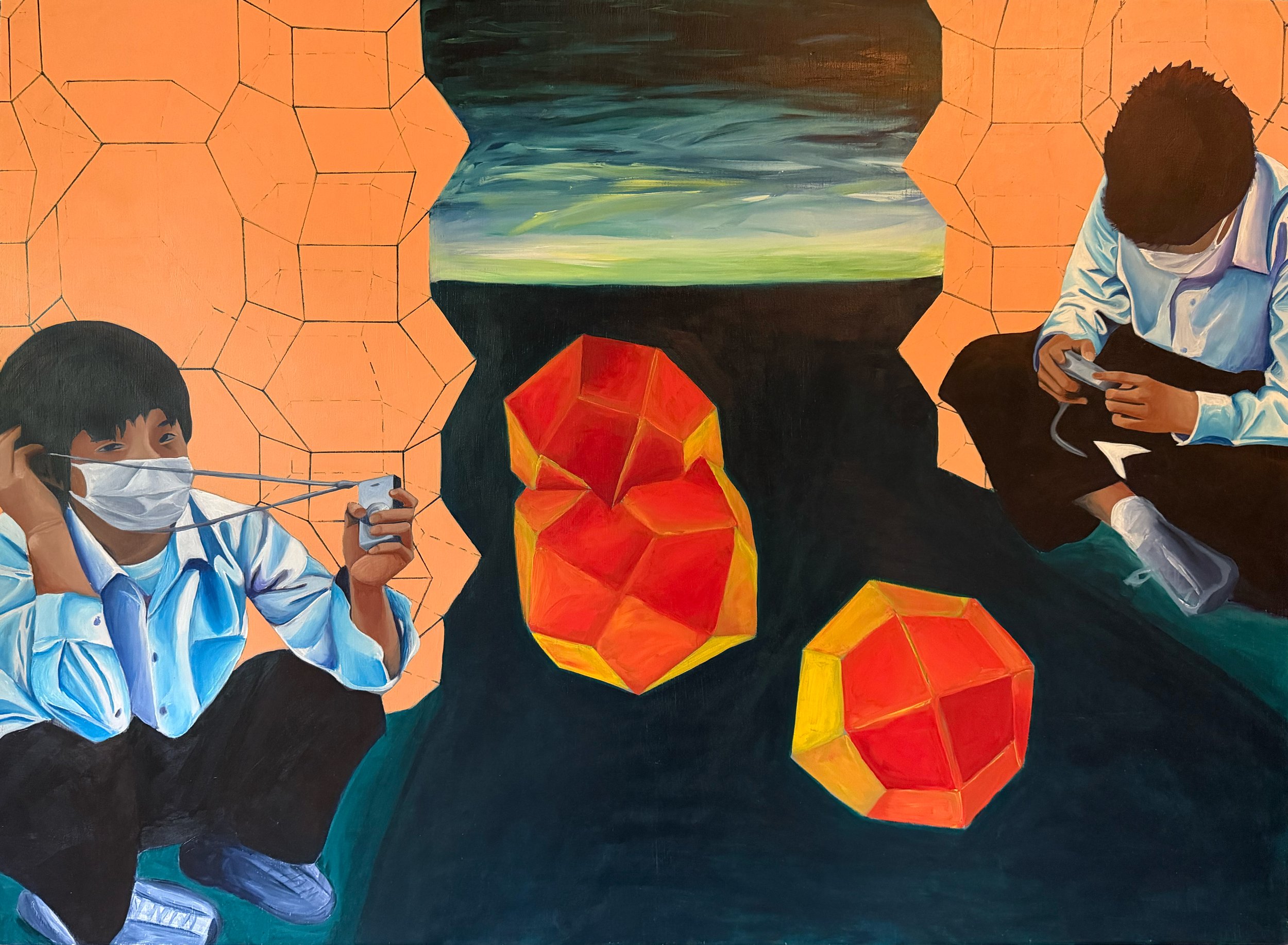
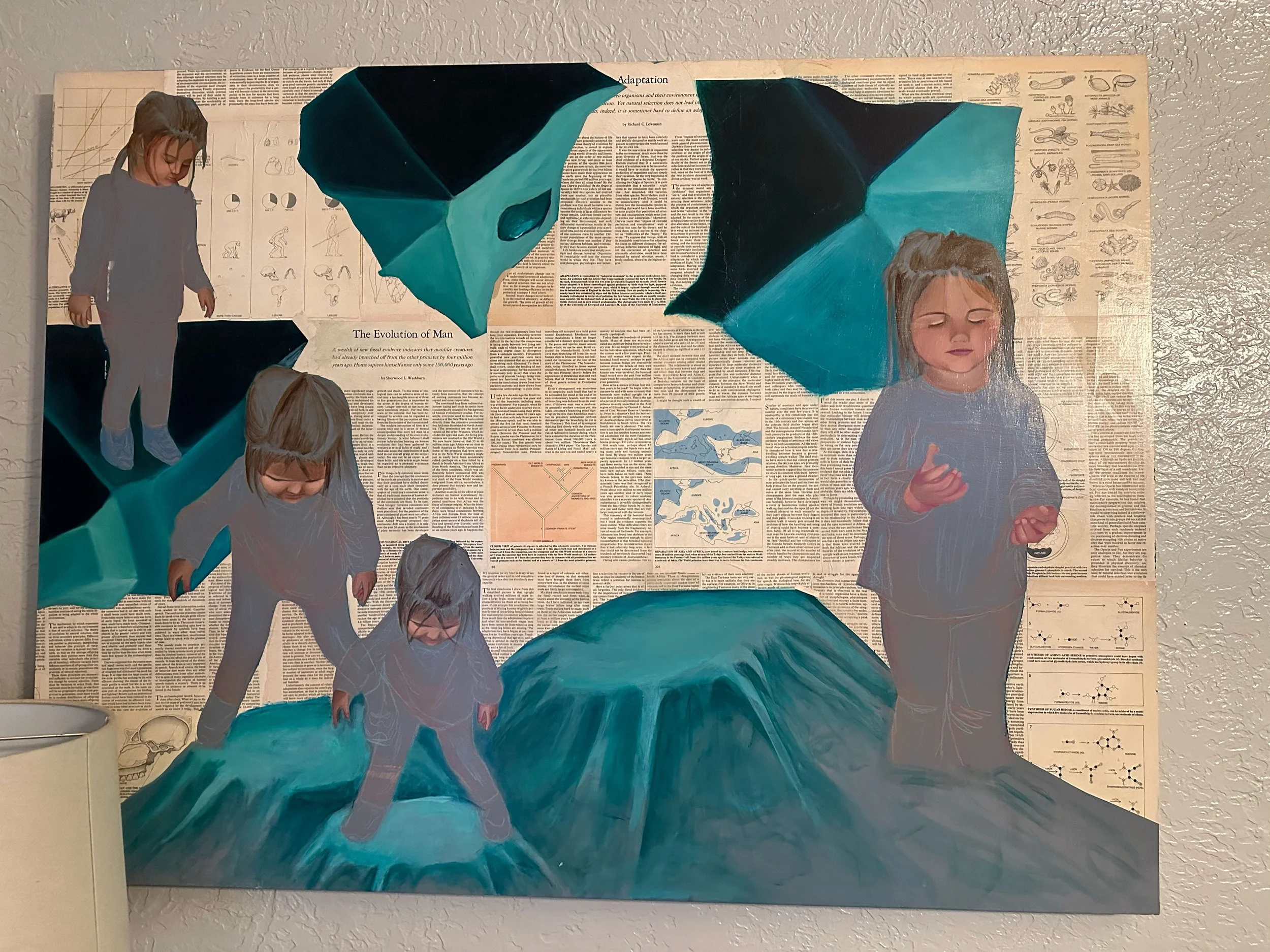
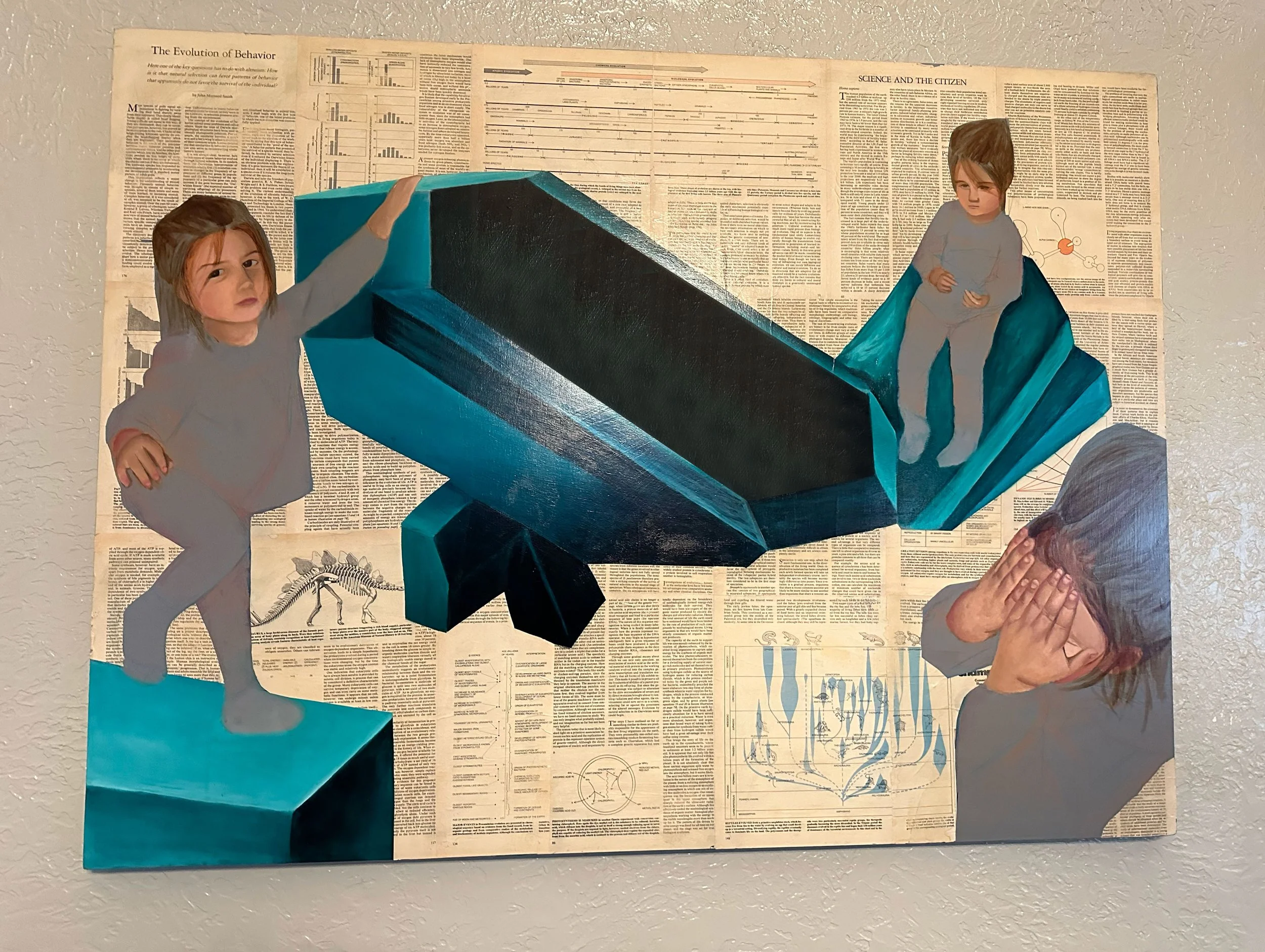
In one painting, Japanese schoolchildren photographed during the 2009 H1N1 outbreak stand before floating trapezohedrons suspended over an ancient sea. The crystalline forms reference twinned crystal growth and lattice distortion. While studying mineralogy, I became fascinated by an observation that younger, smaller crystals often preserve remarkably perfect geometry. As crystals continue to grow, they accumulate imperfections caused by changes in chemistry, pressure, deformation, and geological events.
I began wondering whether there was an analogy hidden there.
Children, like young crystals, possess extraordinary clarity before experience begins introducing complexity. Growth is necessary, yet growth also records disturbance.
The external form reflects an internal structure.
Perhaps people aren't entirely different.
Several of the paintings incorporate pages from Scientific American magazines published during the 1960s and 1970s.
During critiques, viewers often interpreted the geometric forms through the language of science fiction or video games. Collaging scientific journals directly into the surface became a deliberate decision. I wanted the paintings to remain grounded in scientific observation while allowing space for metaphor.
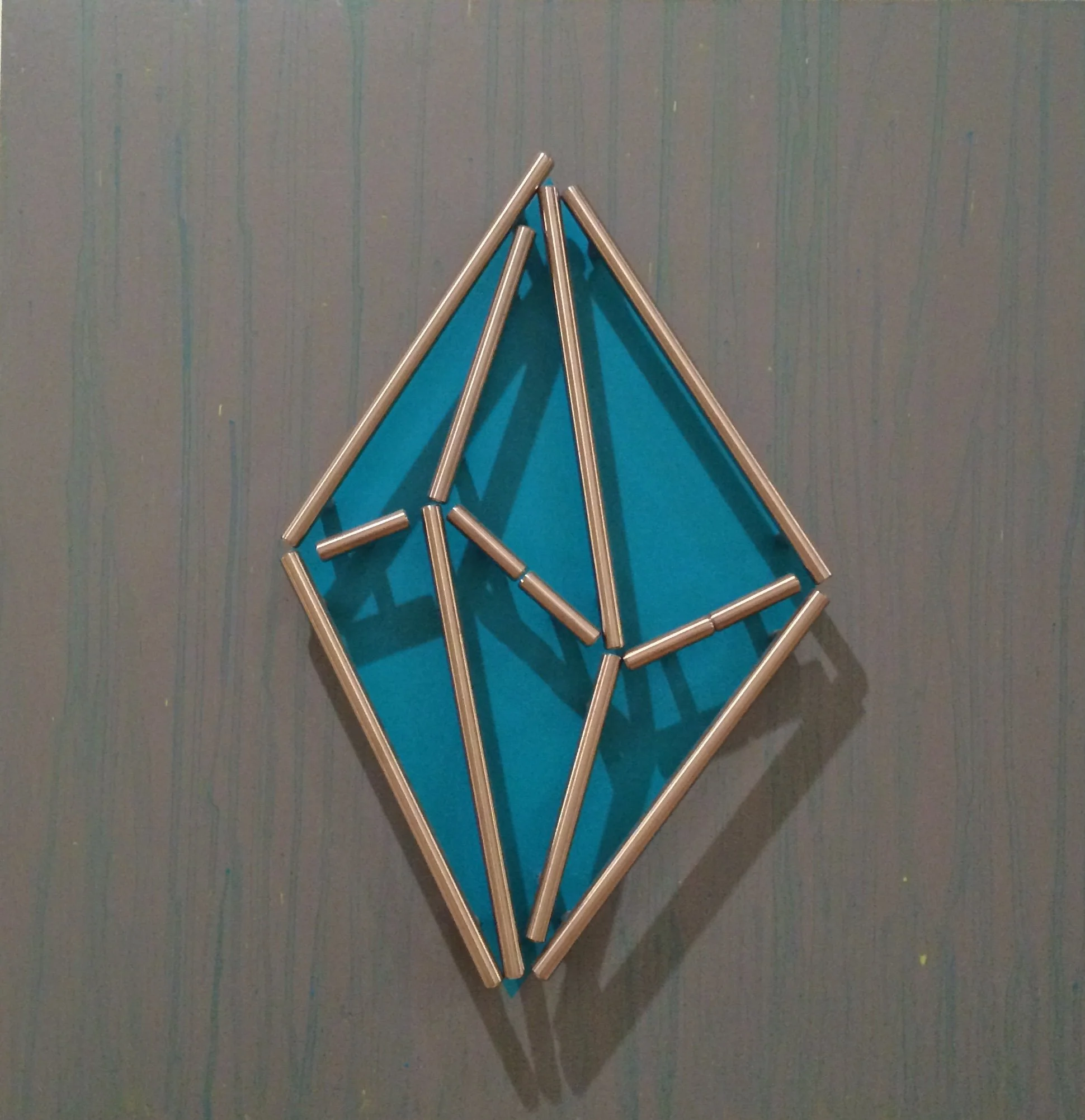
The paintings themselves were constructed on wooden panels rather than stretched canvas. I found the flexibility of canvas resisted the precision I was pursuing. The rigidity of panel supported drawing, collage, and eventually the incorporation of additional materials onto the painted surface.
The medium became part of the research.
Another thread running through the work came from a month I spent studying abroad in Kyoto, Japan, in 2009.
At Doshisha University, I studied philosophy through the lens of shame and honor, alongside a history course examining World War II from the Japanese perspective. Those experiences profoundly shaped how I thought about culture, memory, and perception.
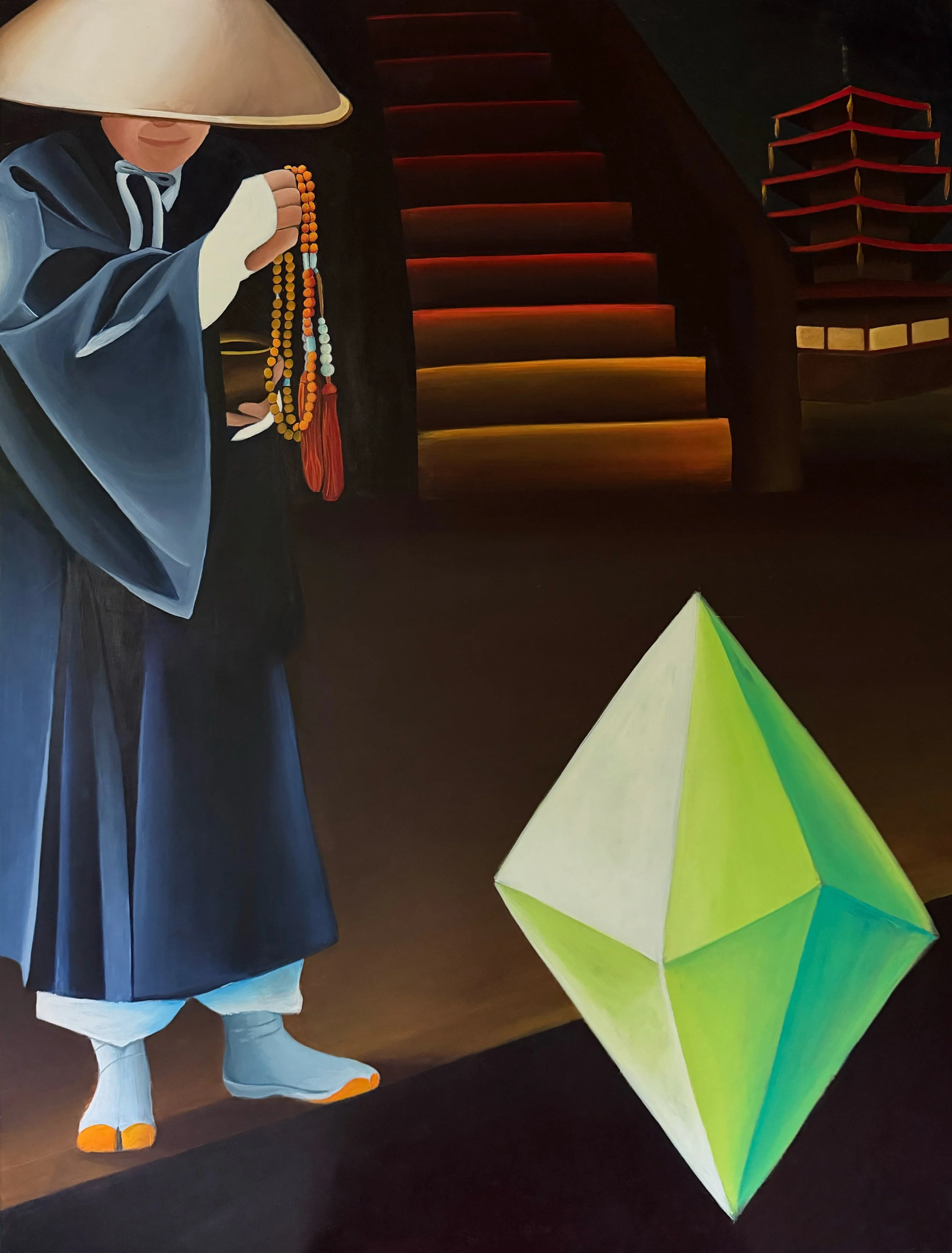
Photographs from Kyoto and Hiroshima became reference material for several paintings.
A Buddhist monk blessing an electric green hexagonal scalenohedron.
Japanese schoolchildren navigating an uncertain moment during the H1N1 outbreak.
Neither image was intended as documentary. Both became opportunities to explore what happens when ritual, culture, and crystallography occupy the same visual space.
One of my favorite paintings from the series features my niece, Tristin.
I painted her into a diptych titled Evolution of Man, collaged over pages from Scientific American. Watching her grow up made me increasingly aware that childhood possesses its own way of seeing the world—one rooted in curiosity rather than certainty. She turned twenty this month. Seeing these paintings again reminds me how much time has passed, but also how remarkably little my questions have changed.
During this recent journey across the country, I realized something I hadn't understood in 2010. At the time, I believed Scaling Reality was about microscopic and macroscopic worlds. Today, I think it was about something larger. It was about relationships. Relationships between scales. Relationships between disciplines. Relationships between physical structure and human consciousness. That realization feels strangely relevant now.
Over the past several months, my writing has begun moving toward geology, landscape, mythology, and ritual. I'm increasingly interested in how geological processes create the environments that shape human imagination. Mountains, rivers, springs, caves, and glacial valleys are not merely settings for history—they become participants in it.
Long before Scandinavia possessed written mythology, tectonic collisions had already raised mountains. Glaciers had already carved valleys. Springs emerged through fractured bedrock. Those landscapes became places where people gathered, worshipped, and imagined the sacred.
The landscape was never simply the backdrop. It helped shape the ritual itself.
Looking back, I don't think this is a new direction. It's a continuation of an old question.
The microscope led me to minerals. > Minerals led me to geology. > Geology led me to landscape. > Landscape has led me to ritual, mythology, and the ways human beings understand themselves through the worlds the Earth creates.